Window Screen Repair and Replacement Guide
How to repair or replace window screens, from torn mesh and loose spline to full frame replacement, with tips for Canadian homes and insect season.
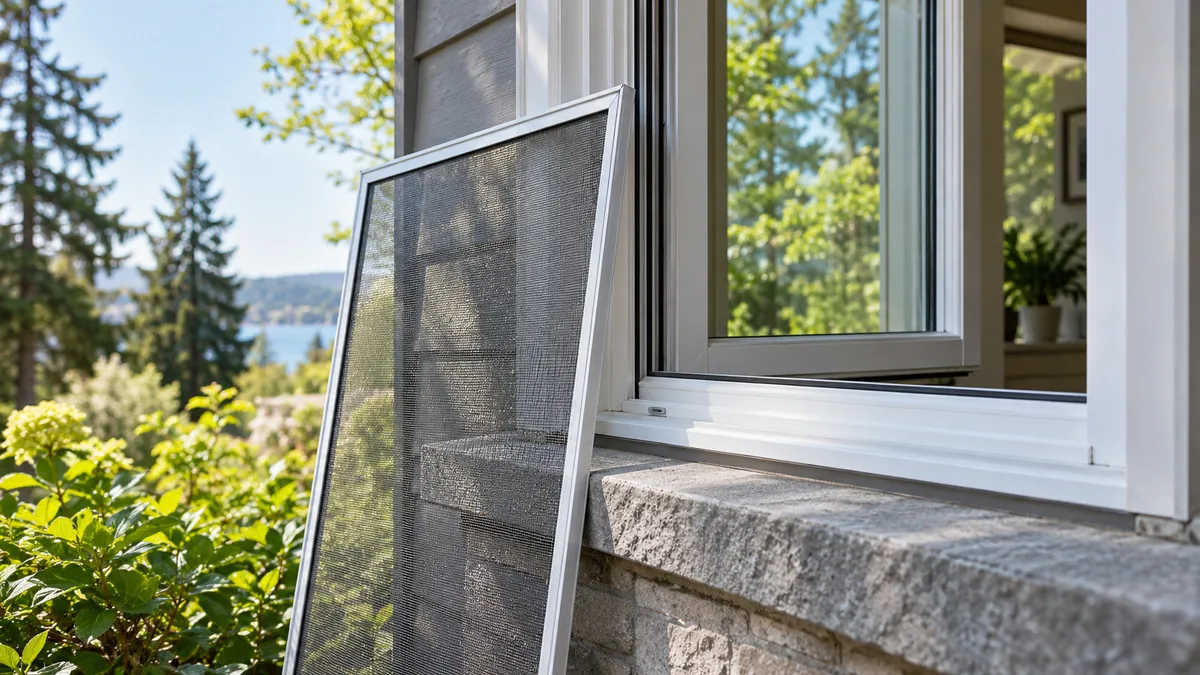
A window screen does more than keep insects out. It lets you ventilate your home in mild weather while keeping out debris, leaves, and pests. When a screen is torn, sagging, or missing, it is tempting to leave the window closed all summer. Most screen problems are repairable, and a full replacement is often quicker and less expensive than people expect.
This guide covers how to assess screen damage, repair small tears, replace spline and mesh, and decide when a new screen frame is the better option. It is written with Canadian seasons in mind, when screens see heavy use from late spring through early fall and are stored through the winter.
Why Window Screens Matter
Screens serve several practical purposes:
- They keep mosquitoes, flies, wasps, and other insects out while windows are open.
- They reduce the amount of leaves, dust, and airborne debris that enters the home.
- They allow cross-ventilation without compromising comfort.
- They provide a modest barrier against small birds and curious pets.
- They let you enjoy fresh air during Canada's short warm season without sealing the house shut.
A damaged screen defeats these purposes. A large tear lets insects in, a sagging screen can catch on the frame, and a missing screen means you either keep the window closed or accept whatever blows in.
Common Screen Problems
Most screen issues fall into a few clear categories:
- Torn or punctured mesh: the most common problem, caused by pets, children, lawn equipment, or accidental impact.
- Loose or missing spline: the rubber cord that holds the mesh in the frame groove can pop out, rot, or become brittle.
- Sagging mesh: mesh that has stretched or come loose from the spline, creating gaps at the edges.
- Bent or damaged frame: aluminum or wood frames can dent, corrode, or rot, especially at the corners.
- Missing screen: the screen was removed and never replaced, or was lost during a move or renovation.
- Poor fit: a screen that does not seat properly in the track leaves gaps around the edges.
Small tears and loose spline are usually easy to fix. Bent frames and rotted wood often point to replacement.
Tools and Materials You May Need
For a screen repair, gather these items before you start:
- Replacement screen mesh (fiberglass or aluminum, matching the original type).
- Spline roller tool and matching spline diameter.
- Utility knife or scissors.
- Flathead screwdriver or spline pick.
- Measuring tape.
- Work gloves.
- New screen frame or corner kits, if the frame is damaged.
Using the correct spline size matters. Spline that is too thick will not seat in the groove. Spline that is too thin will not hold the mesh tightly and the screen will sag.
Repairing a Small Tear in the Mesh
If the tear is small and the frame and spline are sound, a patch can extend the life of the screen:
- Lay the screen flat on a clean surface, mesh side up.
- Cut a patch of matching mesh slightly larger than the tear.
- Position the patch over the damaged area.
- For fiberglass mesh, a small amount of clear adhesive designed for screen mesh can hold the patch.
- Press the patch flat and trim any loose edges.
A patch is a reasonable temporary fix, but it is visible and may not last through a full season. For a clean, lasting result, replacing the mesh is usually better.
Replacing Screen Mesh and Spline
Replacing the mesh and spline restores the screen to near-new condition:
- Remove the screen from the window. Lay it flat on a work surface.
- Use a spline pick or screwdriver to pry out the old spline from the frame groove.
- Remove the old mesh and discard it.
- Clean the frame groove of dirt, old spline fragments, and corrosion.
- Lay the new mesh over the frame, leaving an overlap of roughly 2 to 3 centimetres on all sides.
- Starting at one corner, press the new spline into the groove with the convex side of the spline roller, working the mesh into the channel.
- Continue around the frame, keeping the mesh taut but not overstretched.
- Press the spline fully into the groove on all four sides.
- Trim the excess mesh flush with the outside of the frame using a utility knife.
- Reinstall the screen in the window and check that it seats evenly.
Work in small sections so the mesh does not shift. If the mesh wrinkles, pull the spline back slightly, retension the mesh, and re-roll.
When to Replace the Entire Screen Frame
A full screen replacement is the better choice when:
- The frame is bent, dented, or corroded beyond straightening.
- Wooden frame corners are rotted or soft.
- The frame no longer fits the window track or opening.
- The spline groove is damaged and will not hold spline.
- Multiple screens are worn and you want a uniform look.
- The screen is an odd size no longer carried by local suppliers.
A new frame with fresh mesh and spline often costs little more than a mesh-only repair on a damaged frame, and it eliminates the weak points that caused the original failure.
Measuring for a Replacement Screen
Screen measurements differ from the opening measurements used for a replacement window; our guide to measuring windows for quotes explains the latter.
Accurate measurements prevent ordering the wrong size:
- Measure the width at the top, middle, and bottom of the opening. Use the smallest measurement.
- Measure the height at the left, centre, and right. Use the smallest measurement.
- Measure the frame thickness or profile if you are replacing the full frame.
- Note whether the screen fits into a track, clips into place, or rests on a lip.
- Identify the window type: slider, casement, double-hung, or fixed. Each uses a different screen style.
If you are unsure, remove the existing screen and bring it with you, or take clear photos of the frame corners and how the screen seats in the window.
Screen Mesh Types
| Mesh type | Best for | Notes |
|---|---|---|
| Standard fiberglass | General use | Flexible, resists denting, good visibility |
| Aluminum | Durability | Stronger than fiberglass, can dent, less flexible |
| Pet-resistant | Homes with dogs or cats | Heavier weave, resists claws and pushing |
| Solar | Sun control | Darker mesh reduces glare and heat gain |
| Fine mesh | Tiny insects | Smaller openings for no-see-ums and small flies |
Fiberglass is the most common choice for Canadian homes because it handles seasonal temperature changes well and is easy to install. Pet-resistant mesh is worth considering on ground-floor windows or doors where animals push against the screen.
Seasonal Screen Care in Canada
Canadian screens face a short but intense season of use:
- Spring: inspect screens before the first warm days. Repair tears and replace missing spline before insects appear.
- Summer: clean screens with a soft brush and mild soap. Check that clips and springs hold the screen snug in the track.
- Autumn: remove screens before winter in regions with harsh weather. Store them flat or upright in a dry place to prevent warping.
- Winter: storing screens protects them from snow load, ice, and wind damage. It also improves window insulation by allowing storm windows or tighter sealing.
Leaving screens in place year-round can trap moisture against the frame and accelerate wear on the mesh and spline.
What to Photograph Before You Order
Good photos help a supplier match your screen quickly:
- The full screen from the front, showing mesh condition.
- The frame corners, especially any damage or rot.
- The spline groove, if visible from the edge.
- The window opening with the screen removed, to show track or lip style.
- A tape measure across the width and height.
- Any hardware, such as clips, springs, or lift tabs.
Include one wide shot showing where the screen sits in the window. Close-ups of the corners are useful but meaningless without context.
Repair vs Replace: A Quick Guide
| Situation | Repair | Replace |
|---|---|---|
| Small tear in sound frame | Patch or rescreen | Not needed |
| Loose or missing spline | Rescreen | Not needed |
| Bent aluminum frame | Straighten if minor | Replace if badly bent |
| Rotted wood frame | Not practical | Replace |
| Screen missing entirely | Not applicable | Replace |
| Multiple screens worn | Rescreen each | Consider full set replacement |
| Odd or discontinued size | Custom rescreen | New custom frame |
What to Ask a Screen Supplier or Installer
- Do you carry mesh and spline for my screen type?
- Can you cut a custom size to match my opening?
- Is pet-resistant or solar mesh available?
- Do you install, or do you sell materials only?
- What is the turnaround time for a custom screen?
- Is there a warranty on the mesh or frame?
A local supplier can often make a screen while you wait for standard sizes, which is faster than ordering online and waiting for shipping.
Maintenance to Extend Screen Life
- Vacuum or brush screens gently each spring before reinstalling.
- Wash with mild soap and water; avoid harsh chemicals that degrade mesh.
- Check spline tension each season and re-roll any loose sections.
- Store screens flat or supported upright during winter.
- Repair small tears promptly before they spread.
- Keep pets from pushing or clawing at screens, especially on lower windows.
Frequently Asked Questions
Can I repair a screen without removing it from the window?
Small patches can be done in place, but rescreening requires removing the screen to access the spline groove properly.
How do I know what size spline to buy?
Measure the groove width, or bring a piece of the old spline to the supplier. Common sizes range from 4.5 mm to 6.5 mm, but profiles vary.
Is aluminum mesh better than fiberglass?
Aluminum is stronger and resists pet damage better, but it can dent and is less forgiving during installation. Fiberglass is easier to work with and more common.
Should I leave screens in over winter?
In most of Canada, removing screens for winter is recommended. It protects the screen and allows better sealing and insulation around the window.
Can I use duct tape to fix a torn screen?
Only as a very short-term measure. Tape adhesive fails in heat and humidity and leaves a sticky residue that makes proper repair harder later.
How long does a window screen last?
A well-maintained screen can last 5 to 10 years. Mesh and spline usually wear before the frame, especially on high-use windows.
Screen Repair Cost Expectations
Treat any figure you see online as a planning range rather than a quote. The actual price depends on the screen size, mesh type, frame condition, and whether you need a custom size.
As a general planning guide:
- Small patch repair: usually the lowest-cost option, because it uses minimal materials and time.
- Rescreening an existing frame: a moderate cost, because it requires new mesh, spline, and labour to remove and reinstall the screen.
- New screen frame with mesh: a higher cost, because it includes a new frame, hardware, and fitting.
- Custom or odd-size screens: cost more than standard sizes, especially if the supplier must build to measure.
- Multiple screens: the per-screen cost may drop when several are done at once, because setup and travel are shared.
Ask for a written quote that separates the mesh, spline, frame, and labour. A single lump sum makes it hard to tell whether one contractor is excluding the frame or the disposal.
Working With Your Screen Supplier or Installer
A good supplier will:
- Measure your opening or existing screen to confirm the size before cutting mesh.
- Recommend the right mesh type for your exposure, pets, and visibility needs.
- Use spline sized correctly for the frame groove.
- Ensure the screen seats evenly in the track with no gaps at the edges.
- Explain whether the screen is removable for seasonal cleaning and storage.
If a supplier quotes a screen without measuring your opening, ask them to verify the size first. An ill-fitting screen leaves gaps that defeat the purpose of having one.
Next Steps
A torn or missing screen is one of the least expensive window problems to fix. Windoorly can help you assess whether a screen repair, rescreening, or full replacement is the right choice for your windows.