Why Are My Windows Drafty? Fixes Before You Replace
Find the source of a window draft, from worn weatherstripping to frame gaps, and learn which fixes are worth trying before replacing the window.
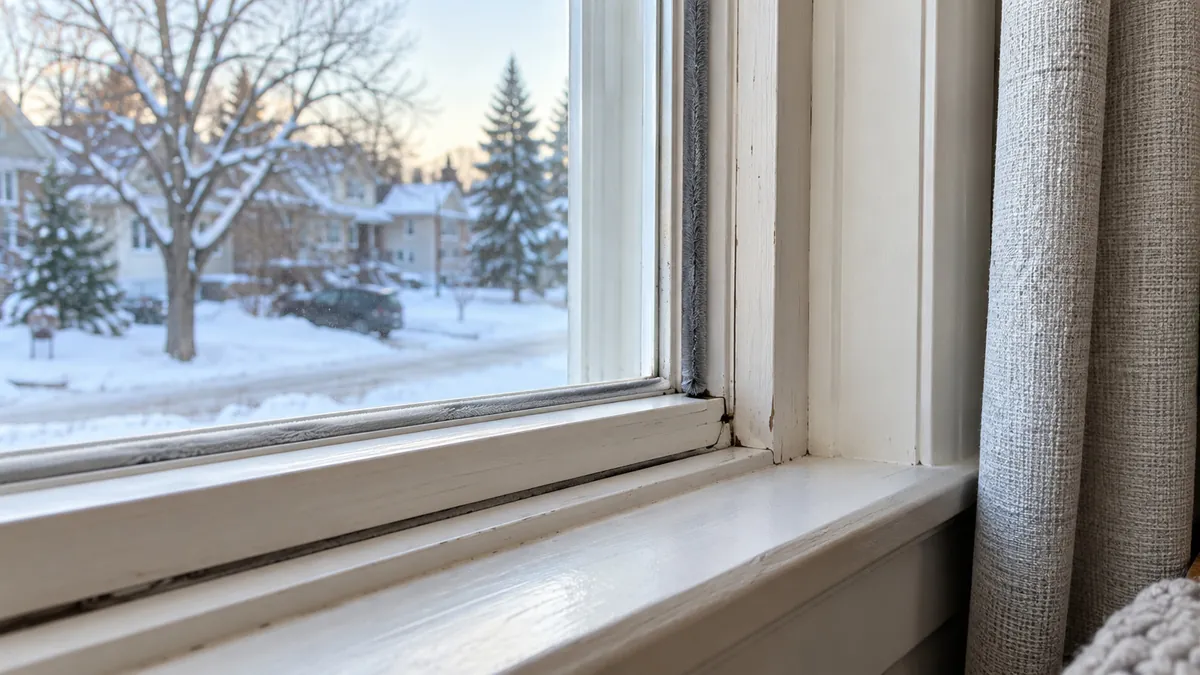
A draft around a window does not always mean the window needs to be replaced. The cause may be worn weatherstripping, a gap in the frame, a sash that no longer closes tightly or air leaking around the window from the wall. Diagnosing the source first can save you from paying for a replacement you do not need.
This guide explains how to test for drafts, the most common causes, and the repairs worth considering. It is written for Canadian homes, where cold winters, wind and long heating seasons make even a small air leak noticeable.
Test Before You Repair
On a cold, windy day, use one or more of these checks:
- Feel test: move your hand slowly around the frame, sash edges, lock and sill. Note exactly where the air is strongest.
- Smoke test: hold a thin stream of smoke from an incense stick near the edges. Watch for movement. Keep it away from curtains and flammable materials.
- Tissue test: hold a lightweight tissue near the suspect area and see whether it flutters.
- Plastic film test: tape clear plastic over the inside of the window. If the draft stops, the leak is around the window; if it continues, the air may be coming from the wall or another opening.
Also check whether the draft is actually cold air falling off the glass. Cold glass can create a draught-like feeling in a room even when the frame is sealed, especially with single-pane windows.
How a Draft Actually Works
Air moves from a place of higher pressure to a place of lower pressure. In a house, that pressure difference can be created by wind, by temperature differences between indoors and outdoors, or by mechanical systems such as fans and furnaces.
This is why drafts are often worse on windy days and near the top and bottom of a house. Warm air rises, and the building acts a little like a chimney. Air leaks in low and out high, or the reverse, depending on the conditions. A window may be the place where you feel the leak even when the opening is only part of a larger air path.
The practical lesson is to trace the air, not just the window. If the leak is around the frame, the fix may be at the frame. If the leak is through the wall, sealing the window sash will not solve it.
What Canadian Weather Adds
Canadian homes face conditions that make drafts more obvious and more costly:
- Cold snaps increase the temperature difference between indoors and outdoors, which increases the pressure that drives air through gaps.
- Wind can push air through small openings that are invisible on a calm day.
- Freeze-thaw cycles move frames, trim and sealant, opening small gaps over time.
- Snow and ice can block or damage exterior details and keep sills wet.
- Long heating seasons mean a small leak runs for months, not weeks.
- Dry indoor air can make weatherstripping brittle and shrink wood components.
A draft that seems minor in October can feel much worse in January. That is why it is worth finding the source before the coldest part of the year.
Common Cause 1: Worn Weatherstripping
Weatherstripping is the flexible material that seals the gap between the sash and the frame. Over time it can flatten, crack, tear or pull away.
Signs include:
- Visible gaps or flattened strips.
- A sash that rattles or feels loose.
- Drafts along one edge of the window.
- Water staining near the weatherstrip.
- A window that feels colder than its neighbours.
A weatherstrip replacement is often a low-cost repair. The right material depends on the window type and the gap. A professional can check whether the sash is also out of alignment, because new weatherstripping will not seal a window that does not close squarely.
Common Cause 2: Gaps Around the Frame
The gap between the window frame and the rough opening is usually insulated and sealed. If that seal fails, air can enter around the window rather than through it.
Look for:
- Cracks in interior or exterior caulking.
- Gaps under the interior trim or stool.
- Loose exterior trim.
- Staining or softness in the wall around the opening.
- Cold spots on the wall beside the window.
Small exterior gaps may be repairable with the appropriate sealant. Larger gaps or water damage may require opening the trim to inspect the insulation and framing. Do not simply cover a wet or damaged area with new caulk.
Common Cause 3: Sash Alignment and Hardware
A window that does not close all the way cannot seal properly. The sash may be binding, the hinges may be worn, or the lock may not pull the sashes together.
Check whether:
- The sash sits evenly in the frame.
- The lock engages without forcing.
- The window can be opened and closed smoothly.
- There is a visible gap along one side.
- The hinges, rollers or pivot bars are loose or damaged.
A minor adjustment may restore the seal. Damaged hardware should be repaired or replaced rather than forced.
Common Cause 4: Glass and Sealed Unit Failure
A failed sealed unit can contribute to cold glass and condensation, but it is not usually the direct cause of a draught around the frame. If the window is foggy between the panes, read our guide to foggy window panes.
If the glass itself feels very cold and the room feels uncomfortable near the window, the glazing may be a factor. A window with modern glazing can improve comfort, but it will not fix an air leak around the frame.
Common Cause 5: The Wall, Not the Window
Sometimes the window is blamed for a draught that comes from somewhere else:
- Gaps around electrical outlets or cable penetrations.
- Missing or settled insulation in the wall.
- Air leaking from a basement or crawl space.
- A poorly sealed exterior penetration nearby.
- An open or ineffective exhaust fan.
- A disconnected duct or a gap at a wall penetration.
The plastic film test can help separate a window leak from a wall leak. If the draft continues with the window covered, investigate the wall and the rest of the room.
Drafts by Window Type
The likely cause depends on the window style. A quick guide:
| Window type | Common draft points | What to check first |
|---|---|---|
| Casement or awning | Hinge side, sash edge, crank seal | Hinges, operator, weatherstrip |
| Slider | Track, meeting rail, rollers | Track debris, rollers, alignment |
| Double-hung or single-hung | Meeting rail, sash sides, sill | Balances, sash alignment, weatherstrip |
| Fixed window | Frame edge, glazing stops | Sealant, trim, frame condition |
| Bay or bow | Joints between sections, roof and base | Sealant, flashing, section joints |
| Patio door | Meeting stile, track, threshold | Rollers, track, threshold seal |
If you are unsure of the type, take a photo of the whole window and the operating hardware. A contractor can usually identify it from the image.
Repairs Worth Trying First
Depending on the cause, these are the usual first steps:
- Replace worn weatherstripping on the sash and frame.
- Re-caulk small exterior gaps with a suitable exterior sealant.
- Adjust or replace hardware so the window closes and locks properly.
- Add or repair interior trim seals where appropriate.
- Improve humidity and ventilation if condensation is part of the problem.
- Use a temporary window insulation kit while you plan a permanent repair.
Avoid sealing a window so tightly that it cannot operate or be used as an emergency exit. Any change that affects opening, ventilation or egress should be checked against the window's intended use and local requirements.
Temporary Fixes and Their Limits
Temporary measures can make a room more comfortable while you plan the permanent repair.
- Window insulation film reduces drafts and cold-glass discomfort for a season, but it does not repair the cause.
- Draft stoppers at the sill or sash can help with a small gap, but they may interfere with operation.
- Heavy curtains improve comfort but can increase condensation if they block airflow.
- Weatherstrip tape is a short-term fix and may not last through a harsh winter.
- Caulking can seal a small exterior gap, but only if the surface is clean, dry and sound.
These measures are reasonable as a bridge. They are not a substitute for fixing a failed seal, a misaligned sash or a damaged frame.
Repair or Replace: The Criteria
Replacement is worth considering when:
- The frame is rotted, cracked or out of square.
- The window has failed in several ways at once.
- Repairs would cost a large share of a new window.
- The window is an older single-pane unit and comfort is a priority.
- Water is getting into the wall around the frame.
- You want a different style, size or operation.
- Replacement parts are no longer available.
For a side-by-side comparison, read window repair vs replacement.
If the window is also difficult to operate, see our guide to windows that will not open, close or lock.
Repair is usually the better first step when the frame is sound, the problem is isolated and the window still operates correctly. A draft alone is rarely a reason to replace a window that is otherwise in good condition.
Planning the Cost
Treat any cost you see online as a planning range, not a quote. The actual price depends on the cause, the number of windows, access, the parts required and local labour rates.
As a general guide:
- Weatherstrip or hardware repair: usually the lowest planning range, because the work is limited.
- Sealant and trim repair: a moderate planning range, depending on how much trim must be opened.
- Full window replacement: the highest planning range, because it includes a new window and installation.
- Multiple windows: the per-window cost may change with scale, but each opening still needs assessment.
The cheapest repair is not always the best value. If a low-cost fix only addresses a symptom and the window is nearing the end of its life, you may pay twice. Ask the contractor to explain what the repair will and will not solve.
What to Tell a Contractor
When you ask for an assessment, describe:
- Where you feel the draft.
- Whether it happens on windy days, cold days or both.
- Whether the window is foggy, difficult to operate or leaking.
- Whether the walls or trim show water stains.
- The age of the window, if known.
- Any repairs already attempted.
A clear description helps the contractor bring the right parts and avoid unnecessary work.
What to Photograph
Photos make the first conversation more useful.
- The whole window from inside.
- The edge where you feel the draft.
- The lock, hinge, crank or track.
- The interior trim and the wall below the window.
- Any staining, soft spots or gaps in sealant.
- The exterior detail above and below the window, if safely visible.
- A tape measure across the opening, if it can be done safely.
Do not climb or lean out to photograph the exterior. If the source is not visible from inside, the contractor can inspect it on site.
A Contractor Checklist
Before booking work, confirm:
- Insurance and business details are current.
- The scope is written down, including what will be sealed or replaced.
- The cause has been identified, not just the symptom.
- The warranty covers both parts and labour.
- Egress and ventilation are not compromised by the repair.
- Clean-up and disposal are included where relevant.
- Any hidden damage has a clear approval process.
A contractor who is willing to explain the diagnosis is usually a better bet than one who quotes a replacement before inspecting the window.
Safety and Indoor Air
Sealing drafts can improve comfort, but it can also change how a house breathes.
- Do not block combustion air for a furnace, water heater, fireplace or other fuel-burning appliance.
- Do not seal a room so tightly that exhaust fans cannot draw replacement air.
- Keep emergency escape windows operable.
- Watch for condensation after sealing work; it can signal a ventilation problem.
- Address moisture sources rather than trapping them behind new seals.
If you have fuel-burning appliances, a qualified professional should confirm that the home still has adequate ventilation after air-sealing work. This is a safety issue, not a comfort preference.
Maintenance That Prevents Drafts
A little routine care goes a long way.
- Check weatherstripping each fall.
- Clear tracks and weep holes.
- Inspect exterior sealant once a year.
- Tighten loose hardware.
- Open and close every window seasonally.
- Fix small water problems before they soften the frame.
- Keep humidity in a reasonable range for the season.
These habits will not make an old window new, but they will help it seal as well as it can for as long as possible.
Frequently Asked Questions
Why is my window drafty only on windy days?
Wind increases the pressure difference across the building. A small gap that is quiet on a calm day can leak noticeably when the wind picks up.
Can I just add more caulk?
Only if the gap is small, clean and dry, and the cause is an exterior seal. Caulk will not fix a misaligned sash, a failed weatherstrip or a wall leak.
Will plastic film stop the draft for good?
No. It is a temporary measure. It can improve comfort for a season, but the underlying gap remains.
Is a drafty window always a window problem?
No. Air can enter through the wall, the basement or another penetration and show up near the window.
Should I replace all my windows if one is drafty?
No. Start with a diagnosis. One drafty window is often a repair, not a sign that the whole house needs new windows.
Can a new window still feel cold?
Yes. Glass is colder than a wall, and a well-sealed window can still feel cool near the surface. Comfort depends on glazing, frame, curtains and room layout.
Is it safe to seal around a window?
Generally yes, but not in a way that blocks combustion air, ventilation or emergency escape. Ask if you are unsure.
Next Steps
Windoorly can inspect the window and discuss repair or replacement based on its condition.
If you are ready for an assessment, request a quote.
Start with the simplest checks and work toward the more expensive ones. Most drafts can be traced, and many can be fixed without replacing the window.