Window Repair vs Replacement in Canada
A practical decision guide for Canadian homeowners: when a window can be repaired, when replacement makes more sense, and how to compare the options.
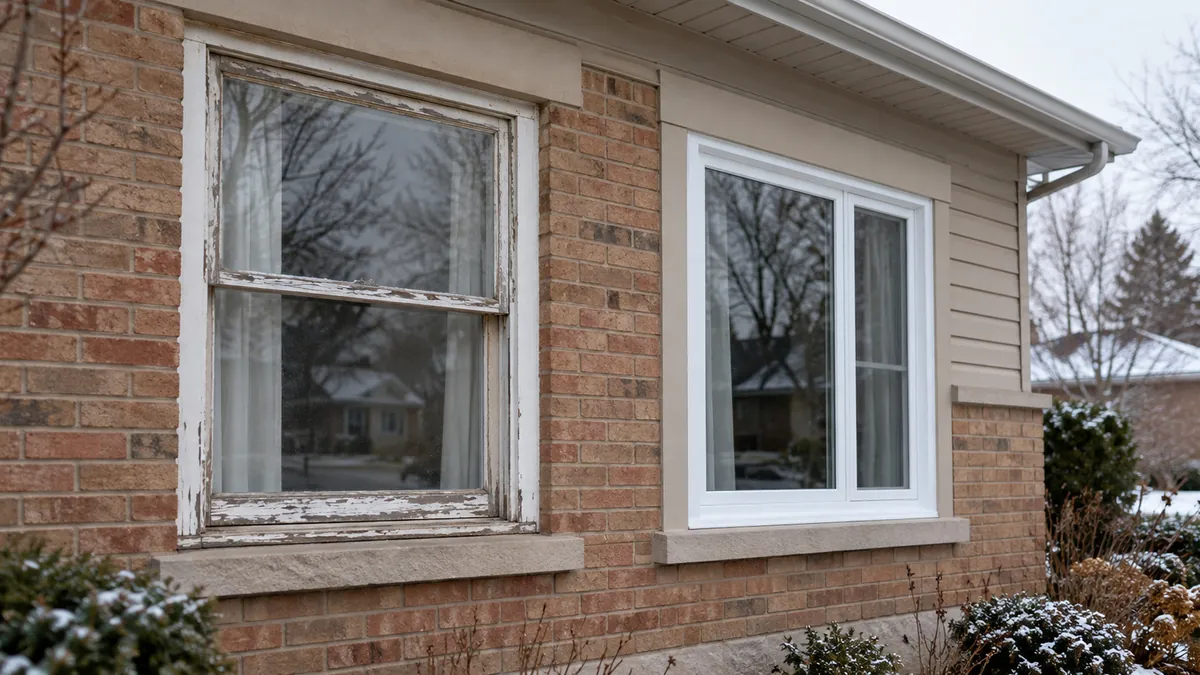
If the frame is sound and one part has failed, window repair is usually the better value. If the frame, seals or glass are failing in several places, or the window no longer performs, window replacement is generally the more durable choice. The right answer depends on the window type, age, damage and what you want the window to do.
This guide explains the signs that favour each option, the questions to ask before booking work, and how to compare a repair quote with a replacement quote fairly. It is written for Canadian homes, where freeze-thaw cycles, snow, wind-driven rain and long heating seasons put windows under a particular kind of stress.
Start With the Frame, Not the Glass
The frame is the structural starting point. A window with a solid, square frame can often accept new hardware, weatherstripping or a replacement sealed unit. A window with soft wood, widespread rot, cracked vinyl or a frame that has moved out of square is a weaker candidate for repair.
Check these areas:
- Frame and sill: look for soft spots, cracks, separation at the corners and staining from water.
- Operating hardware: test the crank, lock, hinges and sliding track. A single stiff or broken part may be repairable.
- Glass and seals: look for fogging, condensation between panes or a visible failed seal.
- Interior and exterior trim: check for gaps, water marks and loose trim that may point to a larger opening problem.
- Comfort and noise: note drafts, cold spots and outside noise that the current window does not control well.
If the frame is sound but the glass seal has failed, a replacement sealed unit may solve the problem without replacing the whole window. That option depends on the window design and whether the unit can be sourced. Our guide to foggy window panes explains how to distinguish a failed seal from surface condensation.
How a Window Fails: A Short Anatomy Lesson
It helps to know what you are looking at before you decide. A typical window has several parts, and each can fail in a different way.
- The frame is fixed into the wall opening and carries the weight of the window.
- The sash is the moving or fixed panel that holds the glass.
- The sealed unit is the assembly of glass panes, spacer and sealed edge. In most modern windows, two panes are separated by a sealed gap.
- The weatherstripping is the flexible gasket that seals the gap between the sash and the frame.
- The hardware includes hinges, cranks, rollers, balances, locks and keeps.
- The flashing and sealant around the opening shed water away from the wall and frame.
A repair makes sense when one of these parts has failed and the others are still serviceable. Replacement makes more sense when several parts have reached the end of their life at the same time, or when the frame itself can no longer hold the other parts in correct alignment.
This is why the frame is the first thing to inspect. New glass in a twisted frame will not seal properly for long. New hardware on a rotting sill will not fix the water problem. The frame is the foundation of the whole assembly.
What Canadian Weather Does to Windows
Canadian homes ask a lot of their windows. The specific pressures vary by region, but the broad patterns are similar across the country.
- Freeze-thaw cycles expand and contract frames, seals and hardware. Repeated movement can loosen joints and shorten the life of weatherstripping.
- Cold glass surfaces make indoor humidity condense more readily, especially in winter.
- Wind-driven rain tests the exterior sealant, flashing and glazing seals.
- Snow and ice can sit against sills and lower frames for weeks, keeping those areas wet.
- Ice damming on roofs and eaves can force water into walls and around openings.
- Summer heat and UV age sealants, finishes and plastic components.
- Coastal salt and wind in Atlantic and Pacific regions add another layer of wear.
A window that performs acceptably in a mild climate may show problems faster in a Prairie winter or an exposed coastal location. When you assess a window, think about how it has handled the last few seasons, not just how it looks on a mild day.
A Step-by-Step Diagnosis
Before you call anyone, work through a simple diagnosis. It will help you describe the problem and avoid paying for work you do not need.
- Identify the window type. Casement, awning, slider, double-hung, bay or fixed. Each type has common failure points.
- Decide whether the problem is operation, sealing, glass or structure. A window that is hard to open is a different issue from one that is foggy or leaking.
- Check the frame for softness and movement. Press a screwdriver handle gently into the sill and lower corners. Look for cracks and separation.
- Look for water. Staining on the interior wall, soft trim, bubbling finish or a damp sill all point to moisture.
- Test the operation. Open and close the window fully. Note where it binds and whether the lock lines up.
- Check the glass. Look for fog, water droplets or a chalky border between the panes.
- Note the symptoms on a cold, windy day. Drafts and condensation are easier to trace when the weather is testing the window.
- Write down what you find. A short list and a few photos will make the contractor conversation much more productive.
If air movement is the main concern, the drafty window guide describes where to look before choosing a repair.
If the diagnosis points to one failed component and the frame is solid, repair is likely the place to start. If it points to several failures or to the frame, replacement deserves a closer look.
Signs That Repair Is Usually Worth It
Repair is often the sensible first option when the problem is limited and the rest of the window is in good condition:
- One window is difficult to open, close or lock because of hardware or alignment.
- Weatherstripping has flattened or torn, causing drafts around an otherwise solid sash.
- A single pane is cracked while the frame and other panes are intact.
- A hinge, crank, roller or lock has failed.
- The finish has worn on a wood window that is otherwise sound.
- The window is relatively modern and matches others in the home.
- The fogging is limited to one sealed unit in a window that otherwise works well.
- A screen, handle or lock keeper is missing or damaged.
In these cases, a targeted repair can restore function without the cost, lead time and disruption of a full replacement. It also keeps the existing trim and exterior finish, which can be useful when the window is part of a matched set.
Signs That Replacement Is the Better Investment
Replacement deserves serious consideration when the problems are widespread or the window is near the end of its service life:
- Multiple panes have failed seals or persistent condensation between the glass.
- The frame is rotted, cracked, warped or no longer square.
- Several windows in the same room or wall show the same failure.
- The window is an older single-pane unit and comfort, noise or energy performance is a priority.
- Repairs would cost a large share of a new window and still leave an ageing frame.
- The opening needs different dimensions or a different window style for safety, ventilation or function.
- Water is getting into the wall around the opening.
- Replacement parts are no longer available for the window.
A replacement is not automatically better just because a window is old. A well-built window that has been maintained can last a long time. The decision should be based on condition and performance, not age alone.
Repair or Replace: A Quick Comparison
| Situation | Usually start with | Why |
|---|---|---|
| One broken lock or crank | Repair | The frame and glass may be fine |
| Torn weatherstripping on a sound window | Repair | A low-cost fix can restore the seal |
| Fogging between panes on one window | Repair or replace the sealed unit | The frame may still be usable |
| Rot in the frame or sill | Replacement | A cosmetic repair may not restore strength or weather resistance |
| Several failed seals in the same window | Replacement | The assembly is near the end of its service life |
| Persistent drafts despite adjustments | Assess both | The cause may be the window, the opening or the wall |
| Old single-pane window, comfort is poor | Replacement | Modern glazing may deliver a meaningful improvement |
| A window that will not lock on an accessible floor | Repair promptly | Security and safety matter more than cost |
| Water staining around the opening | Assess the wall and window | The source must be found before either option will last |
A Simple Decision Scorecard
If you are torn between the two options, score the window on the factors below. This is not a rigid formula, but it helps separate a genuine repair candidate from a window that is nearing replacement.
| Factor | Favours repair | Favours replacement |
|---|---|---|
| Frame condition | Solid, square, dry | Soft, cracked, twisted or damp |
| Number of failures | One | Several |
| Glass | Intact except one unit | Multiple failed units |
| Operation | Works with minor adjustment | Binds, drops or will not lock |
| Parts availability | Standard or available | Obsolete |
| Comfort | Acceptable | Poor in cold or windy weather |
| Water | None | Staining or leaks |
| Remaining service life | Several years expected | Short and uncertain |
If most answers sit in the left column, repair is worth pursuing. If most sit in the right, replacement is likely the more durable choice. If the answers are mixed, get an on-site assessment before committing.
Planning Ranges, Not Promises
Cost is usually the deciding factor for homeowners, but it is also the easiest thing to misjudge. Treat any number you see online as a planning range, not a quote. Actual prices depend on the window size, glass type, frame material, access, condition of the opening, local labour rates and the scope of the work.
As a planning guide, think in relative levels rather than fixed prices:
- Minor hardware or weatherstrip repair: usually the lowest-cost option, because the work is limited and the window stays in place.
- Sealed unit replacement: a moderate cost. You pay for a new glass unit and labour, but not for a new frame or full installation.
- Full window replacement: the highest cost. It includes a new window, removal, installation, finishing and disposal.
- Frame repair or re-glazing: variable. It can be economical on a sound window, but it can climb quickly if hidden rot is found.
- Multiple windows: the per-window cost may change with scale, access and whether the work can be scheduled together.
The important comparison is not repair price versus replacement price in isolation. It is cost per year of remaining service. A repair that costs a little less but only buys a year or two may be worse value than a replacement that lasts for decades. Ask the contractor to explain what you are buying and how long each option is likely to serve you.
Compare Quotes on the Same Scope
A repair quote and a replacement quote can look very different because they cover different work. Ask each contractor to state:
- Exactly which parts will be repaired or replaced.
- Whether the frame, trim, interior finish and exterior finish are included.
- Whether the work includes disposal, permits or any required inspection.
- What warranty applies to parts and labour.
- What happens if hidden damage is found after the window is opened.
- Whether the new window matches the existing opening or requires changes.
For a repair, ask whether the contractor will test the rest of the window before starting. For a replacement, ask whether it is an insert or full-frame installation, because that changes the scope and the price.
A useful habit is to ask for the quote in writing with a line-by-line scope. Verbal estimates are hard to compare, and they leave too much room for misunderstanding when the work begins. If one quote is much lower than the others, find out what it leaves out before you treat it as the best value.
Contractor Checklist
Before you book, confirm the basics. A little screening now avoids problems later.
- Insurance and business details: ask for proof of insurance and a clear business name.
- Written scope: the quote should say what will be removed, installed, finished and disposed of.
- Permits and requirements: ask who is responsible for any permit or inspection that applies.
- Installation method: insert, full-frame or sealed-unit replacement should be stated plainly.
- Warranty: ask what is covered, for how long, and whether labour is included.
- Lead time: confirm the expected schedule and what could change it.
- Payment terms: avoid large upfront payments and ask about a holdback on completion.
- Clean-up: confirm who removes old materials and protects floors and furnishings.
- Changes: ask how unexpected damage or scope changes are priced and approved.
For a repair, also ask whether the contractor will bring the right parts for your window type or will need to order them. For a replacement, ask how the new unit will be sealed, insulated and finished at the interior and exterior.
What to Photograph Before You Call
Photos help a contractor understand the problem before the visit and can reduce the chance of a second trip. Take clear, well-lit images of:
- The whole window from inside and outside.
- The frame corners and sill.
- The lock, handle, crank or hinge.
- The track on a slider.
- Any fog or water between the panes.
- Water staining on the wall, trim or ceiling nearby.
- The exterior sealant and flashing above and below the window.
- A tape measure across the opening and the glass, if you can do so safely.
Do not climb or lean out of a window to take an exterior photo. Use a safely reachable angle, or leave the exterior images to the contractor.
Safety, Egress and Building Requirements
Windows do more than let in light. In bedrooms and some other rooms, they may be part of the emergency escape route. Any repair or replacement should preserve the opening's intended function.
- Do not reduce the clear opening of a window that is used for egress.
- Do not cover or remove safety hardware without knowing how it will be restored.
- Keep the opening clear of furniture, blinds and other obstructions.
- Ask about glazing requirements in locations near doors, low to the floor or in bathrooms.
- Check local requirements before changing the size, style or operation of a window.
- Treat a window that will not open as a safety issue, not just a comfort issue.
A contractor who understands local requirements should be able to explain what applies to your project. If they cannot, that is a reason to ask more questions before proceeding.
Maintenance That Extends Window Life
Whether you repair or replace, maintenance determines how long the window performs. A simple seasonal routine covers most of what matters.
Each season:
- Open and close every operable window.
- Check locks, handles and hinges for looseness.
- Clear tracks and weep holes of debris.
- Look for new cracks, fogging or water stains.
- Wipe up condensation rather than letting it sit.
Each year:
- Inspect exterior sealant and trim.
- Check that flashing above the window is intact.
- Clean glass and frames with appropriate products.
- Test the operation of emergency escape windows.
- Look at the interior trim for signs of moisture.
Every few years:
- Have the exterior sealant renewed if it is cracking or pulling away.
- Check weatherstripping for flattening or tears.
- Assess any fogging that has appeared.
- Review the condition of older wood frames and sills.
Maintenance will not make a failing window last forever, but it prevents small problems from becoming expensive ones. It also gives you a clear record of condition if you later need to decide between repair and replacement.
When to Repair Now and Plan to Replace Later
Sometimes the honest answer is both. A repair can be the right short-term choice even if replacement is on the horizon.
This approach makes sense when:
- The window is safe and functional but worn.
- You are not ready for a larger renovation.
- The window is part of a group you plan to replace together.
- A repair buys time while you save for the full project.
- The repair protects the interior from further water damage.
The key is to be clear about the goal. If a repair is a bridge, say so and ask the contractor what to watch for. If a repair is meant to be permanent, make sure the scope actually addresses the cause rather than only the symptom.
Frequently Asked Questions
Can I replace just the glass in a foggy window?
Often yes, if the frame and sash are sound and a suitable sealed unit can be sourced. The window design and condition determine whether this is practical.
How long does a window repair take?
Many repairs are completed in a single visit. Parts availability and the extent of the work can affect the schedule.
Is it worth replacing one window at a time?
It can be, especially when one window has failed and the others are in good condition. If several windows are failing together, a grouped project may be more efficient.
Will a new window stop condensation?
It can reduce it by improving the glass temperature, but indoor humidity and ventilation still matter. Condensation is not only a window problem.
Does a foggy sealed unit mean the whole window must go?
No. A failed seal is often a glass-unit issue rather than a frame issue. An assessment will confirm whether a new unit can be fitted.
Should I repair a window before selling my home?
Repairing clear defects can make a sale smoother, but the right choice depends on the buyer, the market and the condition of the rest of the home. A clear assessment helps you decide.
Can I do a repair myself?
Simple tasks such as cleaning tracks may be manageable. Glass, balances, sealed units and frame repairs are best left to someone with the right tools and experience.
What if the repair reveals more damage?
A written quote should explain how hidden damage is handled. Ask before work starts so there are no surprises.
Next Steps
Choose repair when the frame is solid, the problem is isolated and the rest of the window still performs. Choose replacement when the frame has failed, several components are worn out, or the window no longer provides the comfort and security you need.
If the cost of repair is close to the cost of replacement, compare the remaining life of the existing window before deciding. A cheaper repair is not good value if the same window is likely to need another repair next year.
Not sure which side of the line your window is on? Send us the details and we will help you compare the options.