Window Energy Ratings Explained for Canadian Homes
Understand U-factor, SHGC, ER rating, and Energy Star Canada so you can choose windows that perform in your climate without overpaying for features you do not need.
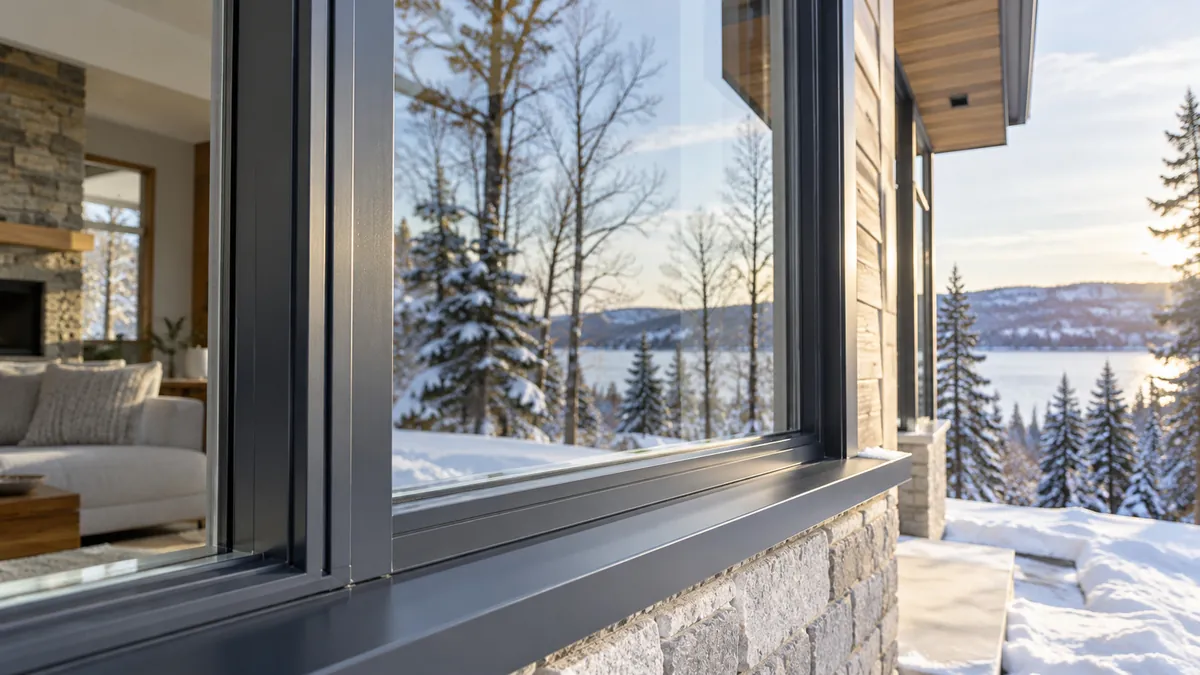
Window energy ratings look like alphabet soup until you know what each number means. U-factor, solar heat gain coefficient, visible transmittance, air leakage, and Energy Star references all appear on labels and quotes, and they influence both comfort and cost.
Choosing windows by price alone often means buying the wrong performance for your home. A window rated for a warm climate can underperform in a Canadian winter. A window with the highest possible rating may cost more than the comfort benefit justifies for your specific room and region.
This guide explains Canadian window energy ratings in plain language, how to read a label, and how to match the rating to your climate, room orientation, and budget. It is written for homeowners comparing replacement windows and trying to avoid over- or under-specifying.
What the Main Ratings Mean
U-factor
U-factor measures how well a window resists heat flow. The lower the U-factor, the better the insulation.
In Canadian heating climates, a low U-factor is the most important number because it keeps indoor heat inside during winter. Typical double-glazed windows have U-factors around 1.4 to 2.0 W/m²K. High-performance triple-glazed units can reach 0.8 to 1.2 W/m²K.
Think of U-factor like insulation in a wall. A lower number means less heat escapes through the glass, which means lower heating bills and fewer cold spots near the window.
Solar Heat Gain Coefficient
SHGC measures how much solar radiation passes through the glass and becomes heat indoors. The scale runs from 0 to 1. Lower SHGC blocks more solar heat; higher SHGC lets more in.
In Canada, SHGC depends on where the window faces and whether heating or cooling dominates:
- South-facing windows: Higher SHGC can provide free solar heat in winter, reducing heating load. Too much can overheat rooms in summer.
- North-facing windows: Low SHGC is less critical because there is little direct sun. Focus on low U-factor instead.
- East and west-facing windows: Moderate SHGC balances morning or evening sun with summer heat gain.
- Rooms with air conditioning: Lower SHGC reduces cooling load in summer.
There is no single best SHGC for Canada. The right value depends on orientation, shading, and whether you heat or cool more.
Energy Rating (ER)
The ER rating is a Canadian scale that combines U-factor, SHGC, and air leakage into one number. Higher ER means better overall energy performance for Canadian heating climates.
ER is useful because it lets you compare windows of different types on a single scale. A window with ER 34 generally outperforms a window with ER 25 in Canadian conditions. Energy Star qualification in Canada is based partly on ER thresholds that vary by climate zone.
Visible Transmittance
VT measures how much visible light passes through the glass. Higher VT means more daylight. Values typically run from 0.30 to 0.70.
High VT is desirable in living areas and rooms where natural light matters. Low-E coatings and multiple panes can reduce VT slightly, so check the number if brightness is a priority.
Air Leakage
Air leakage measures how much air moves through the window assembly when it is closed and locked. Lower numbers mean a tighter window. Canadian standards require testing, and a well-made window with good hardware should have low air leakage.
Even the best glass performs poorly if the frame leaks air. Installation quality affects real-world air leakage more than the lab rating.
Energy Star Canada
Energy Star is a voluntary certification administered in Canada by Natural Resources Canada. Windows that qualify meet strict U-factor and ER requirements for specific climate zones.
Canada is divided into climate zones based on heating degree days:
- Zone 1: Mildest, including parts of coastal British Columbia.
- Zone 2: Moderate, including much of southern Ontario and Quebec.
- Zone 3: Colder, including the Prairies and northern regions.
- Zone 4: Coldest, including the Territories and far northern communities.
A window qualified for Zone 1 may not meet Zone 3 requirements. Always check the zone on the label, not just the Energy Star logo. A window sold in Vancouver may not perform adequately in Winnipeg.
Energy Star qualification is a useful baseline, but it is not a guarantee that a window is optimal for your specific home. Use it as a starting point, then compare actual ratings.
Reading a Window Label
A Canadian window label typically includes:
- U-factor (metric and imperial)
- SHGC
- ER rating
- VT
- Air leakage rate
- Climate zone qualification
- Manufacturer and product series
- Glass type and gas fill
Compare labels side by side. Two windows can look identical and carry very different numbers. The label tells you what you are actually buying.
Matching Ratings to Your Climate Zone
| Climate zone | Priority rating | Typical target |
|---|---|---|
| Zone 1 (mild coastal) | Moderate U-factor, balanced SHGC | ER 25 to 34 |
| Zone 2 (southern central) | Low U-factor | ER 29 to 39 |
| Zone 3 (cold) | Very low U-factor | ER 34 to 44 |
| Zone 4 (coldest) | Lowest U-factor available | ER 40+ |
These are general targets. Your contractor should confirm the appropriate zone for your municipality.
Glass and Frame Choices That Affect Ratings
The rating is the result of several design choices:
- Double vs triple glazing: Triple glazing lowers U-factor but costs more and adds weight.
- Low-E coatings: These reduce heat transfer and can be tuned for heating-dominant or cooling-dominant climates.
- Gas fill: Argon or krypton between panes improves insulation over air.
- Warm-edge spacers: These reduce heat loss at the glass edge and help prevent condensation.
- Frame material: Vinyl and fibreglass insulate better than aluminum. Wood performs well when maintained.
- Frame design: Foam-filled frames and multiple chambers improve ratings.
A high rating often comes from combining several of these features. You do not need all of them in every window.
Orientation and Room-by-Room Strategy
Not every window in your home needs the same rating:
- South-facing living areas: Consider moderate to high SHGC for winter solar gain, balanced with summer shading.
- North-facing bedrooms and bathrooms: Prioritize low U-factor. SHGC matters less.
- East-facing kitchens: Moderate SHGC for morning sun without excessive heat.
- West-facing rooms: Lower SHGC helps control afternoon summer heat.
- Basement windows: Low U-factor matters most. These windows are often below grade and less exposed to sun.
- Rooms with large glass areas: High performance matters more because the glass area is large relative to the wall.
A mixed strategy, higher performance where it counts, standard where it does not, often delivers better value than top-rated windows everywhere.
Cost vs Performance Trade-offs
The window replacement cost guide provides budget context when weighing glazing and performance options.
Energy performance adds cost, but not linearly:
- Moving from double to triple glazing increases cost significantly and may not pay back quickly in a mild zone.
- Low-E coatings add modest cost and usually improve comfort noticeably.
- Argon fill is common and adds little cost for the benefit.
- Premium frame materials add cost but may improve durability as well as rating.
Ask whether the rating improvement justifies the price difference. In many Canadian homes, a well-installed double-glazed window with Low-E and argon performs well without the premium of triple glazing.
Installation Matters More Than the Label
A high-rated window installed poorly performs like a low-rated window. Gaps, missing insulation, poor flashing, and compressed sealing around the frame all undermine the rated performance.
When comparing quotes, confirm:
- The installation method: insert or full frame.
- How the gap between frame and opening will be insulated and sealed.
- Whether flashing and exterior finishing are included.
- Whether the installer is experienced with the product you choose.
A modest window installed carefully often outperforms a premium window installed poorly.
Reading Quotes and Marketing Claims
Watch for vague language:
- "Energy efficient" without numbers is meaningless. Ask for U-factor and ER.
- "Up to X percent savings" depends on your current windows, heating system, and usage. Treat it as marketing, not a promise.
- "A-rated" or similar labels may refer to a European or regional scale, not Canadian ER. Confirm the standard.
A legitimate supplier will provide the NFRC or CSA label numbers and the Canadian climate zone qualification without hesitation.
Frequently Asked Questions
Is triple glazing worth it in Canada?
It can be worthwhile in cold zones, north-facing rooms, or noisy locations. In mild zones or south-facing rooms with shading, double glazing with Low-E may deliver most of the benefit at lower cost.
What is a good ER rating?
For most Canadian heating zones, ER 34 or higher is solid. Cold zones benefit from ER 40+. Zone 1 may be comfortable with ER 25 to 29.
Does Energy Star guarantee comfort?
Energy Star means the window meets minimum performance for a climate zone. Comfort also depends on installation, room orientation, humidity, and your heating system.
Will new windows lower my energy bills?
They can reduce heat loss and improve comfort, but savings depend on the condition of the old windows, the wall assembly, and how the home is used. Be skeptical of precise payback promises.
Should all my windows have the same rating?
No. Match the rating to orientation, room use, and climate zone. Using the highest rating everywhere often costs more than necessary.
What is the difference between U-factor and R-value?
U-factor measures heat loss through the whole window assembly. R-value measures resistance to heat flow and is usually quoted for insulation materials. Lower U-factor is better; higher R-value is better. They are inversely related.
Rating Cost Expectations
Higher-rated windows cost more, but the price jump is not always proportional to the benefit. Treat any figure you see online as a planning range rather than a quote.
As a general planning guide:
- Standard double-glazed window: usually the lowest-cost option, and often sufficient in mild zones or south-facing rooms.
- Low-E coating: adds modest cost and usually improves comfort noticeably.
- Argon gas fill: common and adds little cost for the benefit.
- Triple glazing: increases cost significantly and may not pay back quickly in a mild zone.
- Premium frame materials: add cost but may improve durability as well as rating.
- Professional installation: essential to preserve the rated performance, and worth budgeting for.
Ask whether the rating improvement justifies the price difference. In many Canadian homes, a well-installed double-glazed window with Low-E and argon performs well without the premium of triple glazing.
Working With Your Contractor on Ratings
A good contractor will:
- Confirm the climate zone for your municipality before recommending products.
- Match the rating to window orientation and room use rather than selling the highest rating everywhere.
- Provide the actual U-factor, SHGC, and ER numbers, not just marketing terms like "energy efficient."
- Explain how installation preserves the rated performance.
- Warn you if a window qualified for one zone may not perform in yours.
If a contractor cannot provide the U-factor or ER rating for a product, treat that as a red flag and ask another supplier.
Energy Rating Quick Reference
- Check the climate zone on the label, not just the Energy Star logo.
- Prioritize low U-factor in Canadian heating climates.
- Match SHGC to window orientation and whether you heat or cool more.
- Use ER as a single number to compare overall Canadian performance.
- Confirm actual U-factor, SHGC, and ER numbers, not marketing terms.
- Consider orientation and room use rather than rating every window the same.
- Remember that installation quality affects real-world performance more than the lab rating.
Next Steps
Choosing windows by rating rather than by price alone protects your comfort and budget. Windoorly can help you compare ratings, match products to your climate zone, and plan installation that preserves the rated performance.