Window Replacement Cost in Canada (2026 Guide)
A practical 2026 budget guide to Canadian window replacement, including per-window ranges, what changes the price, and how to compare quotes.
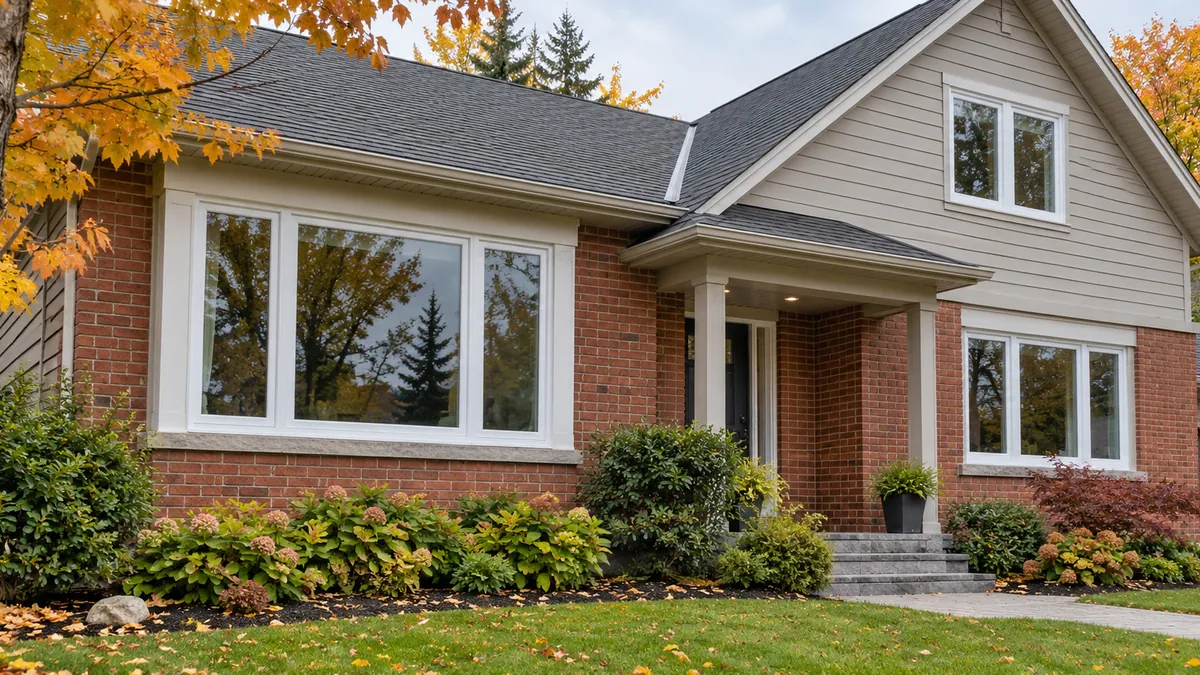
Window replacement costs in Canada commonly fall somewhere between $700 and $2,500 per window installed, with many standard vinyl windows landing in the middle of that range. Bay and bow windows, full-frame installations, custom sizes and high-performance glazing can cost more. Whole-home projects often price lower per window because setup and access are shared.
These are 2026 planning ranges, not quotes or guarantees. Your price depends on the window, the opening, the installation method, your region and what is included. Treat every number here as a starting point for a conversation with a local contractor, then replace it with an itemized written estimate for your actual home.
How to Read These 2026 Ranges
A published range is only useful if you know what sits inside it. Most advertised per-window prices describe an insert replacement of a standard-size window into a sound opening, with basic double glazing, standard hardware and a screen. They may or may not include removal, disposal, interior trim, exterior finishing or taxes.
Before you compare a number from this guide with a number from a contractor, confirm four things:
- Scope: insert or full frame, and how much trim and finishing is included.
- Specification: glass type, frame material, hardware and screen.
- Conditions: whether the quote assumes the existing frame, wall and flashing are sound.
- Exclusions: permits, disposal, scaffolding, blinds removal or repair of hidden damage.
When those four are aligned, per-window prices become genuinely comparable. When they are not, a low number can be a smaller job rather than a better deal.
Typical Per-Window Ranges
Use this table to frame a budget, then confirm the scope with an itemized quote. Ranges assume a straightforward replacement into an existing opening with no significant frame or wall damage.
| Window type | Typical installed range |
|---|---|
| Standard vinyl slider or single-hung | $700 to $1,500 |
| Double-hung vinyl | $900 to $1,800 |
| Casement or awning | $900 to $2,000 |
| Fixed or picture window | $600 to $1,600 |
| Large custom window | $1,500 to $4,000+ |
| Bay window | $2,500 to $6,000+ |
| Bow window | $3,000 to $8,000+ |
Full-frame replacement, new trim, siding work, structural changes or difficult access can add significantly to any of these figures. A window that looks simple from inside may be a more involved job once the exterior trim and flashing are exposed.
What an "Installed" Price Usually Includes
A complete installation price normally covers:
- Measurement and confirmation of the opening.
- The window unit, frame and glass package.
- Removal of the old window or sash.
- Disposal of the old unit and packaging.
- Insulation and air sealing around the frame.
- Interior trim and exterior finishing, subject to scope.
- Hardware, screens and basic operation checks.
- Cleanup and a walkthrough.
Anything beyond that list is a line item to look for. If a quote is silent on trim, disposal or sealing, ask directly rather than assuming it is included.
Window Types and How They Affect Price
Sliders and single-hung windows
Sliders and single-hung windows are the most common budget option because the hardware is simple and the units are produced in high volume. A slider moves horizontally on a track, while a single-hung has one operable lower sash. Both are practical for bedrooms, basements and rentals. See our slider window page for how the operation affects placement.
Double-hung windows
A double-hung window has two operable sashes that tilt or slide for cleaning. The extra sash, balances and hardware raise the cost above a single-hung, but the style suits older homes and offers ventilation from either the top or bottom. Expect to pay more as the size and number of operable sashes increase.
Casement and awning windows
Casement windows hinge at the side and crank outward; awning windows hinge at the top and open outward from the bottom. Both use a crank mechanism, hinges and a more complex seal than a slider, which lifts the price. They are popular where ventilation and a clear view matter. Our casement window and awning window pages explain the clearance and operation trade-offs.
Fixed and picture windows
Fixed windows do not open, so they avoid hinges, tracks and locking hardware. That usually makes them the least expensive unit per square foot, even though large panes use more glass. They are often paired with operable windows to bring in light without adding moving parts.
Bay and bow windows
Bay and bow windows are assemblies rather than single units. A bay typically combines a centre window with angled sides; a bow uses several sections to form a gentle curve. Both need support, exterior framing, roofing or a cap detail and more finishing. The cost reflects multiple units, structural work and labour. Review the bay window and bow window pages before assuming a flat window can simply be swapped for one.
Specialty and custom windows
Arched, angled, oversized, egress or heritage-matched windows are built to order. Custom fabrication, longer lead times and more careful installation all add cost. If your home has unusual openings, budget upward from the standard ranges and ask for a measured quote rather than a per-window estimate.
Frame Material Options
| Material | General cost position | What to weigh |
|---|---|---|
| Vinyl | Lowest to moderate | Good value; colour and hardware can age before the frame |
| Aluminum | Moderate | Slim profiles; thermal performance depends on the system |
| Wood | Moderate to high | Traditional look; needs regular maintenance |
| Fibreglass or composite | Moderate to high | Stable and durable; product quality varies widely |
| Wood-clad | High | Wood interior with a low-maintenance exterior |
The cheapest frame is not automatically the best value if it does not suit the exposure, the humidity or the look of the home. On a coastal or exposed site, hardware and finish quality matter as much as the frame material itself.
Glass and Performance Options
Glass is often where quotes differ most. Two windows can look identical and carry very different glazing packages.
- Double glazing is the common baseline and suits most homes.
- Triple glazing adds a third pane and usually costs more; the benefit depends on the wall, the window and the climate.
- Low-e coatings reduce heat transfer and can be tuned for heating or cooling dominance.
- Argon or other gas fill improves insulation within the sealed unit.
- Laminated glass adds a safety and sound layer and is often used near doors or in noisy locations.
- Tempered glass is required in some locations and costs more than annealed glass.
- Privacy, tinted or decorative glass adds cost and lead time.
Ask for the performance ratings in writing rather than relying on a general description such as "energy efficient." The right package for a south-facing living room is not necessarily the right package for a shaded basement window.
Insert vs Full-Frame Replacement
The insert versus full-frame guide explains when retaining the existing frame is practical and how the scopes differ.
| Scope | What happens | Cost and best use |
|---|---|---|
| Insert | New window fits into the existing frame; interior and exterior stops may be trimmed | Lower cost; best when the frame is sound and square |
| Full frame | Old frame and often surrounding trim are removed; insulation, flashing and finishing are renewed | Higher cost; best when the frame is damaged or the opening needs correction |
An insert replacement is faster and less disruptive. A full-frame replacement addresses the parts you cannot see once the new window is in place. If the existing frame is soft, out of square or poorly flashed, an insert may simply cover a problem that will return. Ask the contractor which method they are quoting and why.
Regional Variation Across Canada
National ranges hide real differences. Labour rates, supplier networks, shipping distance and local demand all move the price.
- Atlantic Canada often sees moderate labour costs but limited supplier choice and added shipping for specialty products. Coastal exposure can increase the specification needed for hardware and flashing.
- Quebec and Ontario have large, competitive markets in the cities and higher prices in remote or heritage-sensitive areas. Older housing stock may require more full-frame work.
- The Prairies can have lower labour rates but significant temperature swings that reward careful installation and good sealing. Winter scheduling affects timelines.
- British Columbia combines high labour rates in some regions with coastal moisture and wildfire-smoke considerations. Product choice and installation detailing matter.
- Northern and remote communities face shipping premiums, limited crews and short installation seasons, which can push costs well above southern averages.
A quote from another province is not a useful benchmark for your home. Get two or three local quotes and compare them on scope.
Whole-Home Budget Examples
For planning only:
- 5 standard windows: roughly $4,000 to $9,000.
- 10 standard windows: roughly $8,000 to $18,000.
- 15 standard windows: roughly $12,000 to $27,000.
- A mix of standard and large or custom windows: budget upward from these ranges.
These examples assume insert replacements, standard sizes and no major repairs. A whole-home project with full-frame installation, custom sizes, bay windows or extensive trim work can exceed them. Add a contingency of roughly 10 to 15 percent for hidden damage, and confirm whether taxes and permits are included.
What a Good Quote Should Itemize
Ask for a written quote that separates:
- Window unit and glass specification, including ratings.
- Frame material and colour.
- Installation method: insert or full frame.
- Removal and disposal of the old window.
- Interior and exterior trim.
- Insulation, sealing and finishing.
- Hardware and screens.
- Any permits or inspections.
- Labour, access and cleanup.
- Warranty terms for the product and the workmanship.
- What happens if hidden damage is found.
A single lump-sum price is hard to compare. An itemized quote lets you see whether one contractor is excluding work that another includes.
Hidden Damage and Contingency
The most common budget surprise is what appears once the old window comes out. Rotted framing, failed flashing, inadequate insulation, water-stained drywall or a wall that is out of square can all add work.
Ask each contractor:
- How do you price unforeseen damage: hourly, per item or a fixed allowance?
- Will you stop and get approval before doing extra work?
- What is a typical contingency allowance for a home like mine?
- Are you insured for the additional scope if the opening needs rebuild?
A reasonable quote names a process, not just a price. A contractor who says "we will deal with it" without a change-order process leaves you exposed.
Warranties
Warranty coverage usually comes in layers:
| Layer | Typical coverage | What to check |
|---|---|---|
| Window unit | Manufacturer warranty | Transferability, exclusions, labour coverage |
| Sealed glass unit | Separate glass warranty | Duration, whether labour is covered, claim process |
| Workmanship | Contractor warranty | Length, what it covers, who performs the repair |
| Hardware and finish | Often limited | Colour fade, corrosion, moving parts |
Read the exclusions. Many warranties cover the glass but not the labour to replace it, or require specific maintenance. Keep your quote, contract and product labels together so a future claim is straightforward.
Red Flags in Quotes and Sales Tactics
Be cautious when:
- The price is only available today or expires at midnight.
- The quote is verbal or handwritten with no specification.
- The contractor cannot explain the installation method.
- There is no written change-order process.
- The company asks for a large deposit before measurement.
- Warranties are described but not provided in writing.
- The quote excludes disposal, trim or sealing without saying so.
- Subcontractors and insurance are not disclosed.
- The salesperson disparages every competitor instead of explaining scope.
A pressure tactic is not a discount. A clear, itemized quote from a contractor who answers questions is worth more than a headline price.
Deposits, Lead Times and Payment Schedules
Window replacement involves a manufacturing lead time that can range from a few weeks to several months for custom units. Ask when the windows are expected to arrive, what happens if they are delayed and whether the installation date is held or merely provisional. A deposit should be reasonable, documented and tied to a written contract. Avoid paying the full amount before the work begins, and confirm the payment schedule covers completion, inspection and cleanup rather than handing over the balance when the units are merely delivered.
Budgeting Step by Step
- Count and categorize your windows by type and approximate size.
- Decide which windows are priorities and which can wait.
- Choose a realistic scope: insert or full frame, standard or high-performance glass.
- Get two or three local itemized quotes.
- Add a contingency for hidden damage.
- Confirm taxes, permits and disposal.
- Compare total cost, warranty and disruption, not just the bottom line.
- Set a start date that suits the season and your household.
Phasing the Work
Replacing in stages can spread the cost, but it may reduce some of the efficiency of a whole-home project. A sensible order is:
- Windows that are leaking, damaged or unsafe.
- Windows in the most-used rooms.
- Windows with failed seals or poor operation.
- Windows that create comfort, security or noise problems.
- Remaining windows as budget allows.
Ask the contractor to quote both a full package and a phased plan so you can see the true cost of splitting the work. Some crews offer a lower per-window price when they can complete a floor or a whole elevation in one visit.
Financing Options
Window replacement is often financed rather than paid in a single payment. Common options include:
- Contractor payment plans, where available.
- A home equity line of credit.
- A personal loan or installment plan.
- A credit card for a smaller, phased project.
- Manufacturer or retailer promotional financing.
Compare the total cost of borrowing, not just the monthly payment. Check whether early repayment is allowed and whether the rate is fixed or variable. Avoid any financing arrangement that is presented as urgent or that you do not fully understand.
Seasonal Timing
Installation can happen year-round in many parts of Canada, but timing affects comfort and sometimes price.
- Spring and early summer are popular and can book up; lead times may be longer.
- Late summer and early autumn often offer mild weather and good availability.
- Winter can work for insert replacements, but extreme cold, snow and wind may limit sealing, exterior finishing and crew safety.
- Coastal and northern regions may have a shorter practical season.
Ask how the contractor protects the opening during cold or wet weather and whether exterior sealing can be completed properly on the scheduled date.
What to Photograph Before Requesting Quotes
Good photos reduce surprises and speed up quoting. Take clear, well-lit images of:
- Each window from inside and outside.
- The full frame, including corners and trim.
- Any fog, condensation, cracks or water staining.
- The exterior sill, flashing and siding around the window.
- The interior sill and wall below the window.
- Hardware, locks, cranks and tracks.
- A tape measure across the width and height for scale.
- Any nearby obstructions such as decks, landscaping or furniture.
Note the approximate age of the windows and whether they have been repaired before. Photos do not replace an on-site measurement, but they help a contractor prepare a more accurate initial range.
Comparing Two Quotes
Put the quotes side by side and check:
- Are the window sizes and styles the same?
- Is the glass specification equivalent?
- Is one an insert and the other a full-frame installation?
- Are trim, disposal and finishing included in both?
- Are the warranties comparable?
- Is the installation team employed or subcontracted?
- Does the quote assume the existing frame is sound?
The lowest price is not always the lowest total cost. A quote that leaves out trim, disposal or repairs can become more expensive once the work starts.
When Repair Is the Better First Step
If the frame is sound and the problem is limited to hardware or one failed sealed unit, repair may be the better value. Read window repair vs replacement.
Compare window repair costs before committing to a full replacement.
Frequently Asked Questions
How much does it cost to replace a window in Canada in 2026?
Most standard replacements fall between $700 and $2,500 per window installed. The final price depends on size, style, frame material, glass, installation method and region. Treat published ranges as planning figures and confirm with a local itemized quote.
Is it cheaper to replace all windows at once?
Usually the per-window price is lower on a whole-home project because setup, travel and access are shared. However, a phased approach can be easier on cash flow. Ask for both prices before deciding.
How long does window replacement take?
A standard insert replacement may take a few hours per window, while full-frame work and larger assemblies take longer. A whole-home project is often scheduled over several days. Weather, access and hidden damage can affect the timeline.
Do I need a permit to replace windows?
Requirements vary by municipality and by the type of work. Like-for-like insert replacements often do not require a permit, while structural changes, new openings or changes to egress may. Ask your contractor and your local building department.
Will new windows lower my energy bills?
New windows can reduce air leakage and improve comfort, but savings depend on the condition of the old windows, the wall assembly, the heating system and how the home is used. Be sceptical of precise payback promises.
What is the difference between insert and full-frame replacement?
An insert fits into the existing frame. A full-frame replacement removes the frame and renews the surrounding trim, insulation and flashing. Full frame costs more but addresses problems the insert would cover.
How much should I allow for hidden damage?
A contingency of roughly 10 to 15 percent of the project cost is a reasonable planning starting point. The right amount depends on the age of the home and what the contractor finds during measurement.
Are triple-pane windows worth the extra cost?
They can be worthwhile in cold or noisy locations, but the benefit depends on the whole assembly. Compare ratings, comfort and budget rather than assuming more panes are always better.
Get a Local Quote
A useful budget starts with the actual window, the opening and the installation scope.
Windoorly provides window installation and repair across its service areas.
Share the number of windows, approximate sizes, photos and what you want to improve, and we can help you plan the next step.