Garage-to-House Doors: Safety, Fire Ratings, and Requirements
A guide to the door between a garage and living space, including fire-rated requirements, self-closers, seals, and what to check for safety and code compliance.
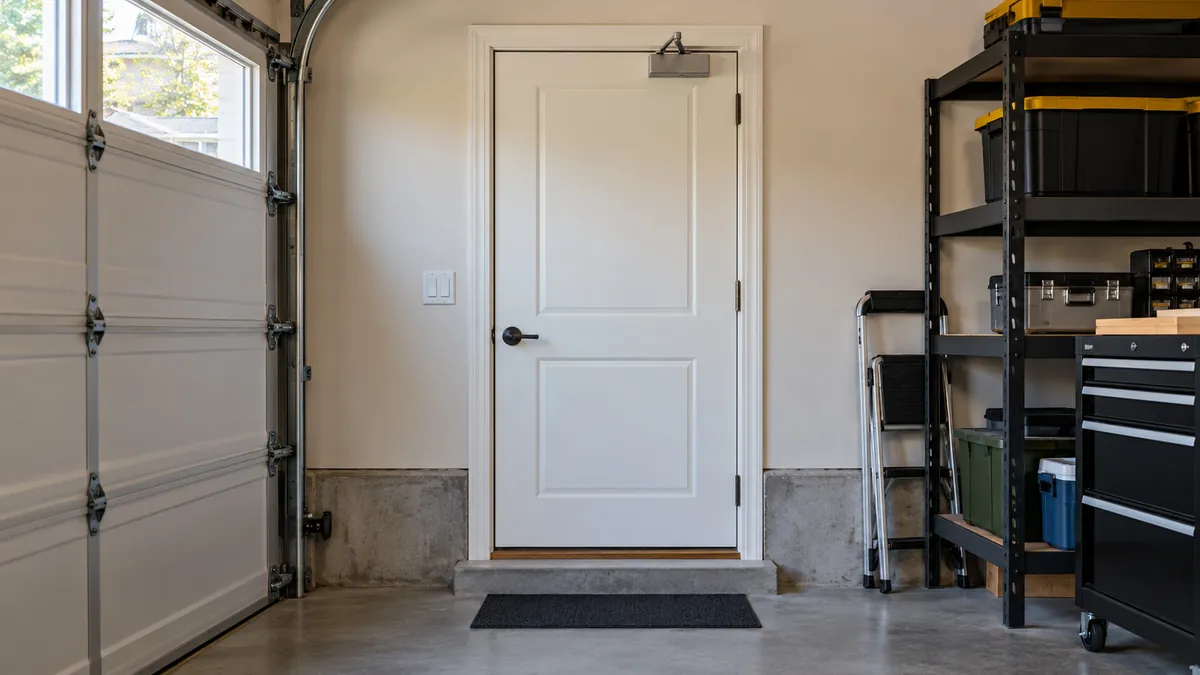
The door between an attached garage and the living space is one of the most important doors in a home from a safety standpoint, yet it is often overlooked. It is part of the fire separation between the garage and the house, it must close and latch reliably, and it often needs a self-closing device. A fault here is not just an inconvenience; it can affect life safety.
This guide explains the requirements for garage-to-house doors, what fire-rated means in this context, what to inspect, and when to call a professional. It is written for Canadian homes, where building codes and municipal bylaws set specific expectations for this assembly.
Why the Garage-to-House Door Is Different
Garages contain gasoline, propane, paint, solvents, and vehicles that can produce carbon monoxide. A fire or fumes in the garage should not spread quickly into the living space. The door between them is part of a tested fire separation and must resist the spread of fire and smoke for a rated period.
Because of this, the door, frame, hardware, seals, and closer are not ordinary components. Changing one part without understanding the assembly can compromise the rating and create a hazard.
Fire-Rated Doors Explained
A fire-rated door is part of an assembly that has been tested to resist fire for a specified time, often 20 minutes for a garage-to-house door in residential construction. The rating applies to the door slab, the frame, the seals, the hardware, and the closer working together.
If any component is replaced with a non-rated part, the assembly may no longer meet its intended performance. For example:
- Replacing a fire-rated door with a standard hollow-core door removes the protection.
- Removing the self-closer means the door may stay open during a fire.
- Painting over or removing intumescent seals reduces smoke resistance.
- Installing a pet door or mail slot breaches the fire separation.
The rating label, usually on the edge or top of the door, identifies the door as part of a listed assembly. Do not remove or paint over the label.
Self-Closing Devices
Our door closer maintenance guide covers operation and adjustment; fire-rated assemblies need compatible, approved components.
Most garage-to-house doors are required to be self-closing. A door closer or spring hinge ensures the door latches after use, so it is not left open accidentally. An open fire-rated door cannot do its job.
Check that:
- The door closes fully from any open position without being pushed.
- The latch engages when the door closes.
- The closer controls the speed so the door does not slam.
- The closer is not leaking oil or disconnected.
If the door does not close and latch on its own, the closer needs adjustment or replacement. Do not prop the door open or disable the closer for convenience.
Seals and Gaskets
Fire-rated doors often use intumescent or smoke seals around the edges. These expand when heated to block smoke and flame. They are not ordinary weatherstripping.
Inspect:
- Seals are present and intact around the door edges.
- Seals are not painted over, torn, or missing.
- The door closes against the seals without force.
- The bottom seal or threshold seals the gap to the floor.
A door that does not close tightly against its seals is not providing the intended fire and smoke resistance.
What to Inspect
Work through the door and frame systematically:
- Door slab: look for cracks, holes, damage, or a missing rating label.
- Frame: check for soft wood, cracks, or separation from the wall.
- Hardware: test the lock, latch, and handle. The door should latch without lifting.
- Closer: confirm it closes and latches the door reliably.
- Seals: verify they are present and undamaged.
- Glass: if the door has glass, it should be fire-rated glazing, not ordinary glass.
- Threshold: check that it seals and does not create an unsafe step.
Any modification, such as a cat flap, mail slot, or added lock, should be reviewed for its effect on the rating.
Common Problems
- The door has been replaced with a non-rated slab during a past renovation.
- The self-closer has been removed because it slammed or was inconvenient.
- A pet door has been cut into the door, breaching the fire separation.
- The frame has rotted or been damaged by water.
- The seal has been painted over or removed.
- The door does not latch because the frame has shifted or the strike is misaligned.
Each of these reduces the door's ability to protect the living space from the garage.
Canadian Code Context
Building codes in Canada, and municipal bylaws derived from them, address garage-to-house separations. Requirements vary by jurisdiction and by whether the home is new or existing, but common expectations include:
- A fire-rated door or equivalent protection between the garage and living space.
- Self-closing hardware on the door.
- Sealed penetrations for ducts, pipes, and wires between the garage and house.
- Carbon monoxide protection, often including a CO detector near the garage.
Older homes may not meet current standards, but when the door is replaced or renovated, it should generally be brought into compliance. A qualified contractor can confirm what applies to your home.
When to Call a Professional
Arrange an assessment if:
- The door has no visible rating label.
- The self-closer is missing, disconnected, or not working.
- The frame is soft, cracked, or out of square.
- The door does not close and latch on its own.
- A pet door, mail slot, or other opening has been cut into the door.
- You are replacing the door and want to maintain compliance.
- You are unsure whether the door is fire-rated.
Do not modify a fire-rated door yourself. Cutting holes, changing hardware, or removing the closer can void the rating and create a safety issue.
What to Photograph Before You Call
- The full door from inside the house and from the garage side.
- The rating label, if visible.
- The closer and its mounting.
- The latch and strike plate.
- The seals around the door edges.
- The frame corners and any signs of rot or water damage.
- Any modifications such as pet doors or added locks.
Take photos in daylight and include one wide shot showing the door in context.
Maintenance
- Test the closer monthly to confirm the door closes and latches.
- Keep the latch and strike plate clean and aligned.
- Inspect seals quarterly for damage or paint buildup.
- Lubricate the closer and hinges as recommended.
- Do not prop the door open or disable the closer.
- Address water damage around the frame promptly.
Frequently Asked Questions
Does every garage-to-house door need to be fire-rated?
In most Canadian jurisdictions, yes, for attached garages. Detached garages may have different requirements. Confirm with your local building department.
Can I replace a fire-rated door with a standard door?
No. A standard door does not provide the same fire and smoke resistance. Replace it with a listed fire-rated assembly.
Can I install a pet door in a fire-rated door?
No. Cutting into the door breaches the fire separation and voids the rating.
Does the closer need to be a specific type?
It should be a listed self-closing device suitable for the door weight and rating. A spring hinge or hydraulic closer is common.
What if my older home does not have a fire-rated door?
It may have been acceptable when built, but any replacement or renovation should meet current standards. A contractor can advise on upgrading.
Can I paint a fire-rated door?
Yes, but do not paint over the rating label or the intumescent seals. Use paint that does not build up excessively on the sealing edges.
Safety Repair Cost Expectations
Treat any figure you see online as a planning range rather than a quote. The cost of garage-to-house door work depends on whether the door, frame, closer, or seals need attention.
As a general planning guide:
- Self-closer adjustment or replacement: usually a modest cost, because the part is small and the work is quick.
- Strike plate or latch repair: a modest cost, because the parts are small and the work is quick.
- Fire-rated door replacement: a higher cost, because the door, frame, seals, and closer must all be listed components.
- Frame or seal repair: variable, and can rise if rot or water damage is found.
- Multiple safety items: doing the closer, seals, and hardware together can share the service visit cost.
Ask for a written quote that separates the door, frame, closer, seals, hardware, and labour. Because this is a safety assembly, do not accept a lump sum that does not specify the fire-rating components.
Working With Your Contractor on Safety Doors
A good contractor will:
- Confirm whether the door is fire-rated and check the rating label.
- Inspect the frame, closer, seals, and hardware as a single assembly.
- Use listed, fire-rated replacement components, not ordinary hardware.
- Test that the door closes and latches on its own after the work.
- Explain what code or bylaw requirements apply to your home.
If a contractor suggests replacing a fire-rated door with a standard door, or removing the self-closer for convenience, get a second opinion. Those changes compromise life safety.
Garage-to-House Door Quick Reference
- Part of the fire separation between garage and living space.
- Must close and latch reliably, usually with a self-closing device.
- Do not cut pet doors, mail slots, or other openings into the door.
- Do not remove or disable the self-closer.
- Check seals, closer, latch, and frame as a single assembly.
- Use listed fire-rated replacement components, not ordinary hardware.
- Report faults in rentals or multi-unit buildings to the property manager.
- Comfort comes second to life safety.
Does every garage-to-house door need to be fire-rated?
In most Canadian jurisdictions, yes, for attached garages. Detached garages may have different requirements. Confirm with your local building department.
Can I replace a fire-rated door with a standard door?
No. A standard door does not provide the same fire and smoke resistance. Replace it with a listed fire-rated assembly.
Can I paint a fire-rated door?
Yes, but do not paint over the rating label or the intumescent seals. Use paint that does not build up excessively on the sealing edges.
What if my older home does not have a fire-rated door?
It may have been acceptable when built, but any replacement or renovation should meet current standards. A contractor can advise on upgrading.
Next Steps
The garage-to-house door is a safety assembly, not an ordinary interior door. Windoorly can inspect the door, frame, closer, and seals, and recommend repairs or replacement that preserve the required protection.