Sliding Patio Door Hard to Open? Causes and Fixes
Work through the common reasons a sliding patio door sticks, from dirty tracks and worn rollers to alignment and frame problems, before replacing it.
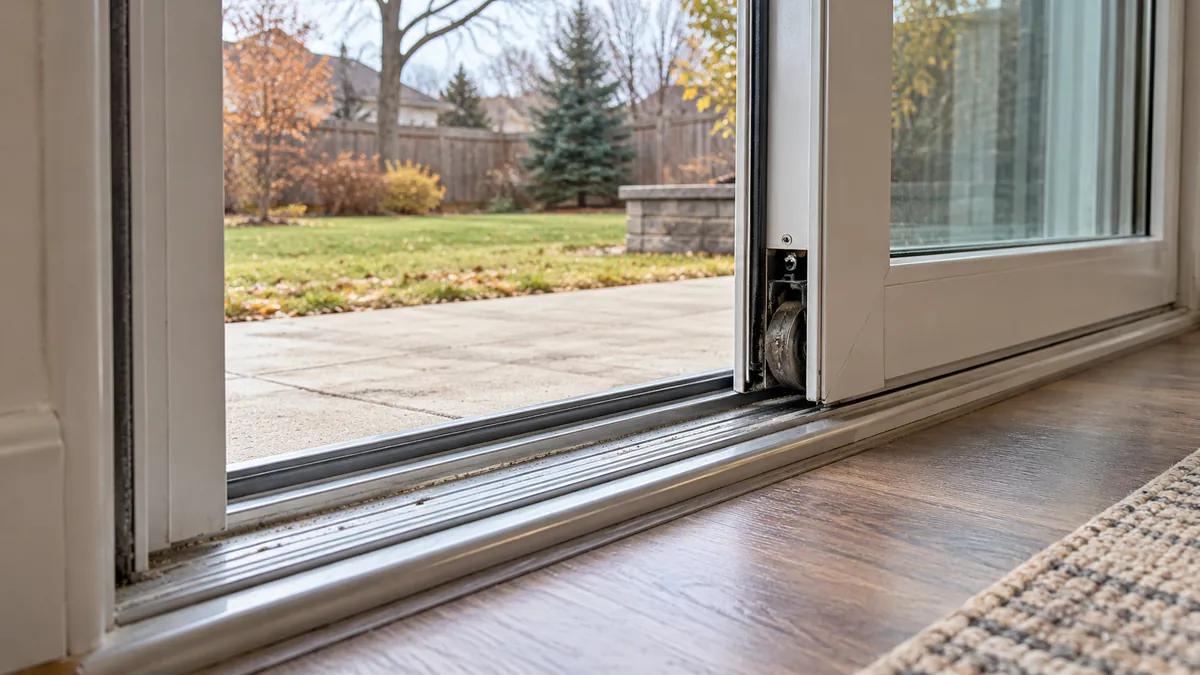
A sliding patio door that is hard to open usually has a track, roller or alignment problem. Cleaning the track and checking the rollers may solve it. If the panel is warped, the frame has moved or the hardware is worn out, a repair or replacement may be the better route.
Do not force a stuck slider. Forcing it can damage the rollers, bend the track or crack the glass.
First Checks
- Make sure the door is unlocked and the latch is fully released.
- Look along the track for grit, hair, pet fur, gravel or hardened debris.
- Check the top and bottom tracks, not just the bottom.
- Look for a bent track or a loose track cover.
- Test whether the panel lifts or rocks when you try to move it.
- Check the rollers through the access holes or by lifting the panel only if it is safe to do so.
- Look at the gap between the panel and the frame at the top and sides.
If the door moves a little and then binds, the problem is likely debris or a damaged roller. If it is tight along the whole track, alignment or a warped panel is more likely.
How a Sliding Door Works
A sliding patio door carries a large glass panel on two or more rollers that run in a track. The panel's weight sits on the bottom rollers, while the top track guides it and helps prevent it from tipping. The lock pulls the panel against the frame and usually engages a keeper on the fixed panel or jamb.
That design has consequences. A small amount of dirt under a roller can feel like a heavy door. A roller that has flattened makes the panel sit lower, so it scrapes the track and may catch on the threshold. If the panel drops far enough, the lock will not line up and the door will seem stuck when the real problem is height.
Sliding doors also have drainage paths in the track. If those slots are blocked, water can sit under the panel, corrode the rollers and soften the frame. A door that is hard to move after heavy rain may have a drainage problem as well as a dirt problem.
The panel is heavy, so small changes in height have a large effect. A roller that is a few millimetres low can make the door scrape, strain the lock and wear the seal. Adjust in small steps and test the full travel after each change.
Cause 1: Dirty or Damaged Track
The bottom track collects dirt and debris. Over time, the rollers can flatten or seize.
What to do:
- Vacuum the track.
- Wipe it with a damp cloth and a mild cleaner recommended by the manufacturer.
- Clear the drainage slots.
- Check for bent or lifted track sections.
- Avoid heavy grease that attracts dirt.
If the track is damaged, a repair may be possible. A badly bent track may need replacement. Do not use abrasive cleaners or a sharp tool that scratches the track; a rough surface will collect dirt faster and wear the rollers.
Clean the top track too. It does not carry weight, but grit there can stop the panel running smoothly and can damage the guides.
Cause 2: Worn Rollers
Rollers carry the weight of the panel. When they wear, the door can drag, scrape or become hard to move.
Signs include:
- A grinding or scraping sound.
- The panel sits lower than before.
- The door moves unevenly.
- The bottom of the panel rubs on the track.
- The rollers are flat, cracked or stiff.
Roller replacement is often a straightforward repair if the panel and frame are sound. The correct roller depends on the door model and weight. A roller rated for a light panel will fail quickly under a heavy glass unit.
Do not assume all rollers are the same. Height-adjustable rollers are common, and the adjustment screw may be accessible through a hole in the panel edge or under a cap. If you cannot see the adjustment point, do not pry at the panel.
Cause 3: Misalignment
The panel may have dropped or moved out of alignment.
Check:
- Whether the gap at the top and sides is even.
- Whether the panel rubs at one corner.
- Whether the lock lines up.
- Whether the door has dropped on one side.
- Whether the frame is still square.
A professional can adjust the rollers and alignment. Do not remove the panel unless you know how to support its weight and reinstall it safely. A large glass panel is heavy and awkward, and a slip can injure you or break the glass.
Misalignment can also come from the frame. If the opening is out of square, adjusting the rollers may only move the binding point. Check the frame for movement, cracks or water damage before spending time on the panel.
Cause 4: Warped Panel or Frame
A warped panel or a frame that has moved can make the door bind along its full length.
Signs include:
- A visible curve in the panel.
- Gaps that change from top to bottom.
- The door rubs even after cleaning and adjustment.
- Water damage or soft wood around the frame.
- Cracks in the frame or glass seals.
- Fogging between the panes.
A minor adjustment may help, but a badly warped panel or damaged frame often needs replacement. See door repair vs replacement.
A failed glass seal is a separate problem. Once moisture is inside the sealed unit, the panel will fog and the insulation value is reduced. Cleaning the glass will not fix it; the sealed unit or the whole panel needs replacement.
Cause 5: Lock and Handle Problems
Sometimes the door is not stuck; the lock is holding it.
Check:
- Whether the latch is fully retracted.
- Whether the handle is loose or broken.
- Whether the lock keeper is misaligned.
- Whether the door needs to be lifted to unlock.
- Whether the key or thumb turn moves freely.
Do not force the handle. A lock that is hard to operate should be repaired before it fails completely. If the door must be lifted to lock, the panel height or the keeper alignment is wrong.
Cause 6: Threshold and Weather Seals
A threshold or seal that is too tight can make the door drag.
Check:
- Whether the door sweeps or seals are torn or compressed.
- Whether the threshold is loose or tilted.
- Whether the door drags only at the bottom.
- Whether water is pooling at the threshold.
- Whether the track drains are clear.
A seal replacement or threshold adjustment may solve the problem. If the panel has dropped, fix the alignment first. A seal that is too tight can also make the door hard to lock, because the panel is being pushed away from the frame.
Sliding vs Hinged Patio Doors
Sliding doors and hinged patio doors fail in different ways, even though both face the weather.
Sliding doors depend on tracks, rollers and a level panel. The main enemies are dirt, worn rollers and a frame that has settled. The panel is usually adjusted with roller screws rather than hinges. Our sliding patio doors page covers the common configurations and hardware.
Hinged patio doors swing on hinges and seal against a frame like an entry door. They can drop, swell or lose their weatherstrip, and the repair logic is closer to an exterior door. Hinge adjustment, latch alignment and seal replacement are the usual first steps. See our hinged patio doors page for the differences.
Interior sliding doors (closet or room dividers) use lighter tracks and smaller rollers. The same cleaning and adjustment principles apply, but the components are not built for exterior weather or heavy glass.
Canadian Weather and the Track
Canadian conditions are hard on sliding doors. Winter grit, sand and road salt can collect in the bottom track. Snow and ice can block the track or freeze the drain slots. In spring, meltwater needs somewhere to go; if the drains are blocked, water sits under the panel and works on the rollers and frame.
Summer humidity can swell a timber frame and change the fit of the panel. Freeze-thaw cycles can move a frame or lift a threshold slightly. Wind-driven rain tests the seals and the drainage path.
The practical routine is seasonal: clear the track before winter, check the drains in spring, and clean out grit after storms. A door that becomes hard to move only in winter may have ice or hardened debris in the track rather than a failed roller.
Security
A sliding door that is easy to lift is a security risk. If the panel can be lifted out of the track, the lock is not the only defence.
Check the roller height so the panel cannot be lifted past the top guide. A secondary lock, a track blocker or a security bar can add resistance. The lock keeper should be firmly fixed, and the frame around it should be sound. A lock fitted to a soft or loose frame provides little protection.
Do not adjust the panel so low that it rubs the track, and do not remove the top guide to make it easier to move. Both compromise security and operation.
Rental and Fire Considerations
In a rental or strata property, report a sticking patio door in writing with photos. The door may be part of the building envelope, and exterior alterations may need approval. Do not remove the panel or change the track without permission.
Patio doors are not usually fire-rated, but they are an exit. Keep the opening operable. Do not block the track, add a permanent secondary bar that cannot be released from inside, or seal the door shut. If the door is on a balcony or fire escape route, it must open reliably.
Repairs Worth Trying
- Clean and clear the track.
- Replace worn rollers.
- Adjust the panel height and alignment.
- Replace a damaged lock or handle.
- Replace worn weatherstripping or a sweep.
- Repair or replace a damaged track.
Track cleaning and roller replacement are often good value. A full replacement is more appropriate when the panel, frame or glass is failing.
Safe Adjustments and When to Stop
A careful homeowner can vacuum and clean the track, clear the drains, lubricate according to the manufacturer's guidance and turn an accessible roller adjustment screw in small steps.
Stop if the panel must be removed, the frame is soft or out of square, the glass seal has failed, the door is part of a rental or strata envelope, or the adjustment does not hold. Do not drill new drainage holes, cut the track or force a roller that will not turn.
What to Photograph
- The full door from inside and outside.
- The bottom and top tracks, including debris and damage.
- The rollers through the access holes, if visible.
- The gap at the top and sides with the door closed.
- The lock, keeper and handle.
- The threshold, drains and any water staining.
- The frame corners and any cracks or soft timber.
Include one wide shot and a close-up of the track. Note whether the door sticks at one point or along the whole travel.
Compare Contractor Quotes
Ask:
- What is the diagnosed cause: track, rollers, alignment or frame?
- Will the panel be adjusted, repaired or replaced?
- Are new rollers, seals or track included?
- Is the glass seal or sealed unit affected?
- Is the work guaranteed?
- Will the door still lock and drain correctly afterwards?
A quote that only says "adjust door" is hard to compare. A recommendation to replace should explain why the panel or frame cannot be repaired.
Maintenance
- Vacuum the track monthly in heavy-use seasons.
- Clear drain slots before winter and after storms.
- Clean seals with a mild product and replace them when hard or torn.
- Check roller height and lock alignment annually.
- Keep grit and salt away from the track.
- Do not hang weight on the handle or panel.
- Watch for fogging, water stains or new rub marks.
Frequently Asked Questions
Why does my sliding door stick only in winter?
Ice, hardened debris or a swollen frame can tighten the track. Clear the track and drains, and check whether the door frees up in milder weather.
Can I use oil on the track?
Avoid heavy grease or oil that attracts dirt. Use a product recommended for the door and clean the track first.
Why does the door need lifting to lock?
The panel has dropped or the keeper has moved. Adjust the roller height or alignment rather than forcing the lock.
Can I replace the rollers myself?
Only if you can support and remove the panel safely. Large glass panels are heavy, and a slip can cause injury or breakage.
Is a foggy patio door repairable?
The sealed glass unit has failed. Cleaning will not fix it; the sealed unit or panel needs replacement.
Why can my sliding door be lifted out?
The roller height or top guide is wrong. Correct the adjustment and consider a secondary lock or track blocker.
When to Replace the Door
Consider replacement when:
- The panel is warped or cracked.
- The frame is rotted or out of square.
- The glass seal has failed.
- The door has been repaired repeatedly.
- Parts are unavailable.
- You want a different configuration, glass or security feature.
A new sliding door can improve operation and sealing, but correct installation matters. The opening, track, drainage and threshold all need to be right. If the door is also draughty, read our guide to drafty exterior doors before deciding.
Windoorly can assess a sliding door and explain whether repair or replacement is practical. Request a quote with details of the issue.