Door Sticking, Dragging or Hard to Latch: Causes and Fixes
Find out why a door rubs, drags or will not latch, which adjustments are safe to try, and when the frame or door needs professional repair.
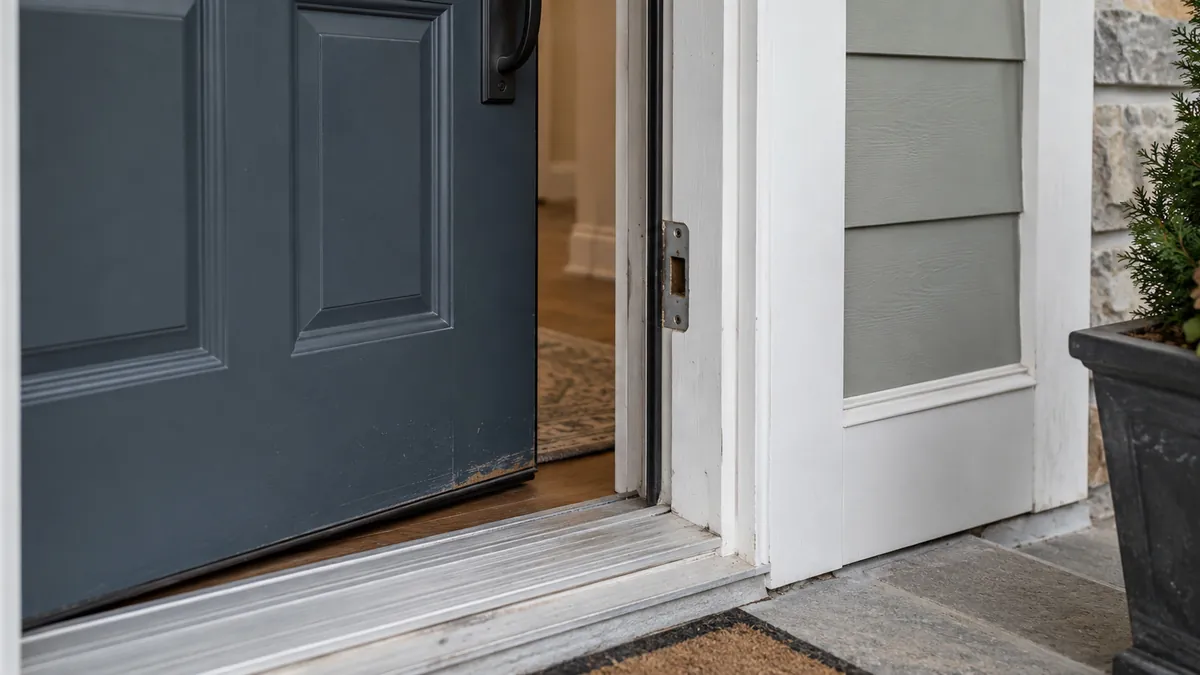
A door that sticks, drags or will not latch is usually out of alignment. The cause may be a loose hinge, a swollen slab, a settled frame, a worn latch or a threshold that has moved. Some adjustments are simple; others point to a frame problem that a quick fix will not solve.
This guide walks through the common causes and the checks to make before forcing the door. It covers interior, exterior and patio doors, because the same symptom can have different causes.
First, Find Where It Rubs
Open and close the door slowly. Look for:
- A rub mark along the top, latch side or hinge side.
- A door that lifts slightly before it latches.
- A gap that is wider at the top than the bottom.
- A latch that misses the strike plate.
- A threshold that the door drags across.
- A hinge that is loose or has pulled out of the frame.
Mark the rub point with a small piece of tape or chalk. That tells you whether the door has dropped, twisted or swollen.
Check from both sides. A door can rub on the interior face but clear the frame outside, which suggests a twist rather than a simple drop. Watch the top gap as the door closes: if it narrows at the latch side, the door is leaning.
Match the Symptom to the Likely Cause
| Symptom | Most likely cause | First check |
|---|---|---|
| Rubs at the bottom on the latch side | Door has dropped | Hinge screws and hinge leaves |
| Rubs along the top | Frame has settled or door is too tall | Top gap and frame square |
| Rubs only in humid weather | Seasonal swelling | Edge seal and moisture |
| Closes but will not latch | Latch and strike misalignment | Latch height and strike plate |
| Needs lifting to lock | Door drop or frame movement | Hinges, then frame |
| Drags across the threshold | Sweep, threshold or hinge drop | Sweep height and threshold |
| Rubs at opposite corners | Warped or twisted slab | Straight edge along the door |
| Grinds along a patio track | Debris, rollers or track damage | Track and roller condition |
The table is a starting point, not a diagnosis. Causes often overlap: a door can drop on its hinges and swell at the same time, and a frame can move while the latch is also worn.
Cause 1: Loose or Worn Hinges
Hinges carry the weight of the door. When screws loosen or the wood around them fails, the door can drop and rub at the bottom.
Check:
- Whether hinge screws turn freely.
- Whether the screw holes are enlarged or stripped.
- Whether the hinge leaves are bent.
- Whether the door moves when you lift the handle.
- Whether the gap at the hinge side changes when the door is open.
A loose screw can sometimes be tightened or replaced with a longer screw into solid framing. Do not use a longer screw without checking what is behind the frame; a cable, pipe or shallow cavity can turn a small repair into a larger one. If the wood is stripped, a professional repair may be needed.
A hinge that is bent or badly worn should be replaced rather than forced. Matching the hinge size and screw pattern matters, especially on heavier exterior doors. Fitting a smaller hinge to carry a heavy slab is a common reason a repair fails.
Cause 2: Seasonal Swelling and Humidity
Solid wood and some composite doors can swell in humid weather. The door may rub only in summer or after a wet period.
Check:
- Whether the problem changes with the season.
- Whether the door edges have been sealed.
- Whether the bottom or latch edge is tight.
- Whether the door has absorbed moisture near the floor.
- Whether the room has a humidity source, such as a bathroom or dryer.
A small amount of swelling can sometimes be addressed by trimming the edge and sealing it properly. Repeated swelling may mean the door is not properly sealed at the edges or the environment is too humid. Do not trim a door without sealing the cut edge; exposed timber will absorb more moisture and the problem will return.
Canadian homes see this pattern clearly. Summer humidity swells timber, then winter heating dries it and opens gaps. A door that is tight in July and rattles in January is showing normal movement. A door that stays tight for months, or has visible swelling and soft edges, has a moisture problem rather than ordinary movement.
Cause 3: The Frame Has Moved
A frame can settle, twist or separate from the wall. This is more serious than a hinge adjustment.
Look for:
- Cracks in the drywall or trim around the frame.
- A gap between the frame and the wall.
- A frame that is no longer square.
- A door that rubs in the same place after adjustment.
- Sticking that affects more than one door in the same area.
If the frame has moved, adjusting the hinges alone may not last. The opening needs to be assessed. In older homes, settlement is common and often gradual; in newer homes, a frame that moves suddenly may point to a structural or moisture issue that should be investigated before the door is repaired.
Test square with a tape measure across both diagonals of the opening. If the measurements differ noticeably, the frame is not square. Do not plane the door to fit an out-of-square opening; you will remove material where it is not needed and create a gap elsewhere.
Cause 4: Latch and Strike Plate Misalignment
If the door closes but will not latch, the latch may be missing the strike plate.
Check:
- The height of the latch against the strike plate.
- Whether the strike plate is loose or worn.
- Whether the door sags when released.
- Whether the latch bolt moves freely.
- Whether the door needs to be lifted to lock.
A small strike-plate adjustment may solve the problem. Enlarging the strike plate opening is a temporary fix if the door is still moving; the underlying alignment should be corrected. Filing the strike also reduces the amount of metal the bolt engages, which can affect security.
If the latch works but the deadbolt does not, the door may be misaligned in a different plane. A deadbolt needs a deeper, more precise engagement than a spring latch, so it is often the first thing to reveal a dropped door.
Cause 5: Threshold and Door Sweep
An exterior door may drag on the threshold or sweep.
Check:
- Whether the threshold is loose or tilted.
- Whether the door sweep is torn or too low.
- Whether water is pooling at the threshold.
- Whether the door has dropped on its hinges.
- Whether the drag is constant or only at one point.
A worn sweep or adjustable threshold may be repairable. If the door has dropped, fix the hinge alignment before adjusting the threshold. A sweep that is pressed too tightly to stop a draught can make the door hard to open and will wear out quickly. Draughts and sticking are often linked: read our guide to drafty exterior doors if both symptoms appear.
Cause 6: Warped or Swollen Slab
A door that is warped will not sit evenly in the frame, no matter how the hinges are adjusted.
Signs include:
- A visible curve along the door edge.
- Gaps that change from top to bottom.
- A door that rubs at opposite corners.
- A slab that feels soft, hollow or delaminated.
- A crack or split in the door surface.
- A door that has been exposed to water at the bottom.
A minor warp may be manageable, but a badly warped exterior door often needs replacement. A warped door can also compromise weather sealing and security. If the slab is hollow or soft, a repair will not restore its shape or strength.
Interior, Exterior and Patio Doors Behave Differently
The same sticking symptom means different things on different doors.
Interior doors are light and usually hung with two hinges. They are sensitive to seasonal swelling and loose screws, but rarely suffer water damage. A sticking bedroom or bathroom door is often a humidity or latch issue; if it has been trimmed before, check whether the cut edge was sealed.
Exterior doors are heavier, thicker and exposed to weather. They may have three hinges, a multipoint lock, a threshold and a sweep. Sticking often comes from a combination of hinge drop, swollen timber and a threshold that has moved. Water involvement changes the priority: a door that drags and shows staining at the bottom needs a moisture assessment, not just an adjustment.
Patio doors split into two families. Sliding doors have tracks, rollers and a large panel; sticking usually points to debris, worn rollers or alignment, covered in our guide to sliding patio doors that are hard to open. Hinged patio doors behave like exterior doors but with large glass and a heavy panel, so hinge and frame faults matter. Our sliding patio doors and hinged patio doors pages explain the hardware differences.
Safe Adjustments to Try
Depending on the cause:
- Tighten loose hinge screws.
- Replace a worn latch or strike plate.
- Clean and lubricate moving hardware as recommended.
- Adjust an adjustable threshold within its range.
- Replace a torn door sweep or weatherstrip.
- Trim a lightly swollen edge only if you can seal it properly.
Avoid planing a door until you know whether the frame has moved. If it is out of square, removing material may create a larger gap elsewhere. Avoid forcing a door that will not latch; repeated force bends hinges and damages the strike.
Note what you adjusted and when. If the same problem returns in a few weeks, that record helps a professional see whether the door is moving or the repair missed the cause.
Security and Latch Integrity
A door that is hard to latch is a security concern as well as an inconvenience. A door that is left unlocked because the bolt will not line up is unsecured.
Check that the strike plate is fixed with screws long enough to reach the framing, not just the trim. Check that the deadbolt engages fully when the door is closed normally, without lifting or pushing. If the door has dropped, correcting the hinges will often restore engagement without touching the lock.
Do not remove the deadbolt or leave the strike plate loose to solve a misalignment. If the frame around the lock is split or soft, the door may need a professional repair or replacement.
Fire-Rated Doors
A fire-rated door that drags or will not latch is a safety issue. These doors are part of a tested assembly, and their frame, seals, hinges, closer and glazing are not ordinary components.
Do not plane the edge, enlarge the strike, remove the self-closer or change the hardware to make a fire door easier to use. Those changes can prevent it from closing correctly in a fire. If the door is in a rental, apartment or commercial building, report the fault to the property manager and let them arrange a compliant repair. The same caution applies to a garage-to-house door with a rating label.
Rental and Commercial Considerations
In a rental, the tenant should report the fault in writing with photos. A door that will not latch affects security and habitability, so it is not a cosmetic complaint. Temporary measures such as lifting the door to lock it are not a repair.
Landlords should treat repeated sticking as a signal, not a nuisance. If the same door has been adjusted several times, the frame or slab may be failing. Replacing a worn latch is reasonable; replacing a door that will not stay aligned may be cheaper long term.
Commercial doors face heavy use. Closers, panic hardware and heavy hinges wear differently, so repairs should use hardware matched to the door's duty.
When to Call a Professional
Arrange an assessment if:
- The door has dropped and the hinges are pulling out.
- The frame is cracked, soft or out of square.
- The door will not lock securely.
- The problem returns after adjustment.
- The door is an exterior door and water is involved.
- The door is part of a fire-rated or commercial assembly.
- The slab is warped, cracked or delaminated.
A security or fire door should not be modified without understanding the requirements. In those cases, repair or replacement must preserve the door's intended performance.
What to Photograph
Photos help a contractor decide whether the job is an adjustment or a larger repair.
- The full door from both sides.
- The rub mark, with the door closed and open.
- The gap at the top and along both sides.
- Each hinge, including the screws and any torn wood.
- The latch and strike plate, close up and in context.
- The threshold, sweep and any water staining.
Include one wide shot so the close-ups make sense. If the problem is seasonal, note the date and weather.
Compare Repair Quotes
Ask:
- What is the diagnosed cause?
- Will the frame be adjusted, repaired or replaced?
- Are hinges, latch, strike and seals included?
- Is the work guaranteed, and for how long?
- What happens if the frame is found to be soft?
- Is the door fire-rated or part of a commercial assembly?
A quote that only lists "adjust door" is hard to compare. Ask what will be adjusted and what will be checked if the adjustment does not hold.
Maintenance to Prevent Recurrence
- Tighten hinge screws gently once a year.
- Keep the latch and hinges clean and lightly lubricated.
- Seal cut edges if a door has been trimmed.
- Watch for new rub marks after humid or cold spells.
- Keep exterior thresholds clear and check drainage.
- Fix a small latch misalignment before it damages the strike.
Frequently Asked Questions
Why does my door stick only in summer?
Humidity swells timber and some composite slabs. If it frees up in drier weather, the movement is seasonal. If it stays tight, check the edge seals and frame for moisture.
Why does my door close but not latch?
The latch is probably missing the strike plate because the door has dropped or the strike has moved. Fix the alignment before enlarging the strike.
Is it normal to lift a door to lock it?
No. It is a sign of hinge or frame movement and will usually get worse.
Can a warped door be repaired?
A badly warped, soft or delaminated slab generally needs replacement; a minor warp may be manageable.
Repair or Replace?
Repair is usually appropriate when the door is sound and the problem is alignment or hardware. Replacement is worth considering when the slab or frame is warped, rotted or repeatedly failing. See our guide to door repair vs replacement for a fuller comparison.
Windoorly can assess the door and explain the practical options. Send us the details to get started.